Canada’s ship of state is sinking. While U.S. president Donald Trump threatens massive damage to Canada’s economy through the imposition of tariffs on Canadian imported goods and further threatens our sovereignty by loudly proclaiming a desire to make Canada the 51st state, Canada’s parliament is at a standstill having been prorogued by Prime Minister Justin Trudeau. Prorogation followed months of parliamentary deadlock caused by Trudeau’s government refusing to surrender documents required by law to parliament.
The country also finds itself ill-prepared to respond to Trump’s threats but also to threats posed by China and Russia with regard to Canada’s sovereignty over the Arctic. In addition, there are manifold domestic issues including housing affordability, health care, crime, border security, and economic stagnation. The government’s pursuit of a climate change and woke identity politics agenda has resulted in policies that thwart economic growth and social mobility. Trudeau has effectively run the Canadian ship of state aground.
As the captain of the ship, Trudeau has demonstrated little to no competence and a penchant for making grand gestures while delivering little of substance. The nation has veered off its historically measured and successful course under Trudeau’s captaincy. Too far into the voyage, Canadians began to realize that things were going badly wrong and called out the government. Support for the Trudeau Liberals started to crumble. He blamed broad public dissatisfaction on the public’s own inability to grasp what a tremendous job he and his crew were doing. Trudeau denied that he was in any way responsible or that a correction was needed and instead doubled down on his talking points until, finally, his own caucus and senior ministers began to quit their watch and leave the bridge. When it became clear that the nation, and his own political career, were about to run aground, Trudeau prorogued parliament and jumped ship. While the ship continues to list badly, Trudeau carries on as if he is still at the helm and sailing in calm seas.
In January 2012 Italian cruise ship Costa Concordia capsized after striking rocks off a Tuscan coastal island. While 4,200 people were saved in the ensuing rescue operation, 33 perished. The disaster, completely avoidable, occurred when the captain, Francesco Schettino, ordered the helmsman to swing the vessel closer to Giglio Island to execute a maritime salute that included sounding its horn. The maneuver was purely for show but went horribly wrong because the Indonesian helmsman and the Italian captain had difficulty communicating due to language differences. The helmsman steered the ship in the wrong direction and although Schettino ordered him to change course again it was too late, and the Costa Concordia struck some rocks, suffered a 53-metre tear in its hull, and began to take on water.
With a damaged rudder and no power, the ship veered toward the island, ran aground and began listing to the starboard (right) side. As the vessel drifted toward shore a frightened passenger called her daughter in Italy who, in turn, contacted the Italian coast guard. The latter called the Costa Concordia, but Schettino told them they had only experienced a blackout. The coast guard contacted the ship again minutes later and the captain replied that while they were taking on water, they only needed some tugboats.
About fifteen minutes after the first rescue vessel arrived, Schettino ordered that the ship be abandoned by all passengers and crew. The captain left the bridge twenty-five minutes later and soon left the vessel, later claiming that he fell off the ship and landed in a lifeboat. The last crew member left the bridge thirteen minutes later even though 300 people were still aboard. A coast guard captain ordered Schettino to return to the ship to supervise the rescue operation, but Schettino refused.
After more than 21 months of preparation culminating in a massive 19-hour salvage operation that required specially designed equipment and 500 people, the Costa Concordia was righted, removed and towed away to be scrapped.
Schettino was tried and convicted and, following an appeal, finally sentenced to 16 years in prison, but not before he held a panic management seminar in 2014 and published a book, The Submerged Truths, which he dedicated to those lost in the disaster and in which he cast himself as a hero.[1]
In a letter directed to a maritime safety conference in London in 2018, Schettino wrote from prison, “I have always stressed the importance of the Bridge Team efficiency and effectiveness. In my life I have never left things unplanned. Notwithstanding my attitude, that night I have experienced that a whole team of conning officers, three of them including a deck cadet while on duty at their radars and ECDIS stations, did not detect that the ship was running aground”.[2]
On two prior occasions, he was involved in maritime accidents that resulted in damage. A woman with whom he was having an extramarital affair was on the Costa Concordia’s bridge the night of the disaster.
The tragic story of the Costa Concordia is a parable that Canada should have paid careful attention to. The moral lesson it delivers is a simple one. A person who exhibits poor judgement, who asserts that all is well when demonstrably things are going badly awry, who denies responsibility for the disaster they have orchestrated, and who ultimately deserts their post when everything is all but lost should never have been given the role they had in the first place. Such people are not invisible. They are dilettantes and narcissists. They are glib when seriousness is required and at other times feign seriousness to obscure their shallowness and incompetence. They also surround themselves with sycophants who lack the moral courage to do the right thing until it is well past time to throw the engines into reverse and bring things back under control.
The solution to righting the Canadian ship of state and getting back under way is not to replace the captain with someone who sails using the same set of charts as the previous captain, who thinks themself heroic, and who similarly regards themself as above criticism or challenge from the same crew that served under the previous captain. The solution is to choose a captain and crew who understand that the whole vessel needs a refit and a new set of charts, and who collectively possess a full appreciation of the hazards that lie ahead but who are laser-focused on navigating those hazards to successfully reach the promised destination. A captain and crew who don’t have a predilection for grand gestures, preferring, instead, operational effectiveness.
To right the ship of state, Canadians needs to carefully consider the Costa Concordia parable, remove any trace of Canada’s own Captain Schettino and anyone who ever served on the bridge with him, and select a captain and crew ready and capable of beginning the wholesale refit and relaunch the country needs and deserves.
After more than nine years in power the Trudeau Liberals have failed to meet even the exceptionally low expectations critics and political opponents had for them going into and following the 2015 federal election. Their fiscal record is appalling. After declaring that “Canada is back” Trudeau’s international profile soared, but our reputation globally has since fallen to the ground like smuts from a Canada Day firework. They are painfully ‘woke,’ fueling grievances by relentlessly stoking a narrative of colonial oppression, white privilege, gender discrimination and a host of other ‘isms.’ They are operationally ineffective, bend feebly to bullying from both China and the U.S., and are obsessed with a range of policy interests such as battling climate change, ending systemic racism, or addressing income inequality that ultimately can be reduced to a single ambition – the rendering of the chimera that is woke social justice.
Critically, for their ongoing political survival, they have one core competency; they have mastered the creation and dissemination of a narrative that paints their political opponents, in fact anyone who disagrees with them or criticizes them, as the ‘other,’ and portrays Liberals as the sole arbiters of truth and all that is right and virtuous. They also benefit from a captive media in the form of a state-owned broadcaster funded with an annual $1.5 billion stipend and an array of privately owned media companies that rely on the government for hundreds of millions of dollars in annual payroll subsidies. Warnings were issued, even from within the entities that would benefit, when the decision to bail out legacy media companies was being considered. Those warnings were not heeded, and the outcome has been pretty much as predicted; traditional media outlets in Canada appear, at a minimum, to be seriously compromised in terms of their ability and willingness to challenge the government and, at worst, appear to be fully complicit in painting and erecting the façade that hides from view this government’s true state of corruption.
To argue that this government is corrupt is not to imply that they are routinely engaged in unlawful activities where special favours are dispensed to friends of the administration in exchange for large sums of money, although the lingering stench from the SNC/Lavalin and WE Charity scandals, to name just two of many, suggests that such exchanges are entirely within the realm of possibility. The argument here is that the government is corrupt because it does not engage honestly or in good faith with the public it was elected to serve. It is entirely corrupt in its purpose which is only to retain power. It is corrupt in its belief that it alone possesses righteous virtue and that its opponents are not only wrong in their thinking and own beliefs, but also evil. Key members of this government are so manifestly corrupt it appears that they believe their own lies and are completely untroubled by any cognitive dissonance their actions would normally provoke in someone acting with any moral agency.
The rot which permeates the Trudeau Liberal government was brought into sharp focus by its handling of the truckers’ ‘Freedom Convoy’ in early 2022. The initial response was pure Liberal playbook; Justin Trudeau denigrated, demeaned, and dismissed the protesters and their concerns during a press conference describing them as a “fringe minority” with “unacceptable views.” At that point, the Convoy was still assembling across the country and making its way to Ottawa. Television coverage suggested that it looked like being more than just a fringe minority as lines of trucks took to the nation’s highways and crowds of supporters cheered them on from the roadside or overpasses as the Convoy rolled by.
The fragmented protest leadership was collectively a politically naïve group to the point that one faction arrived in Ottawa bearing a “memorandum of understanding” expressing their belief that a committee could be formed between the protesters, the Senate, and the Governor General to revoke vaccine mandates and other COVID-19 restrictions. They also suggested a governing coalition between the Conservatives, NDP, Bloc, and the protesters could be formed. The idea that an unelected group could insert itself into the parliamentary process belies a fundamental lack of understanding of how Canada’s democracy works. To their credit, when they realized their ill-formed plans to engage the government as some sort of partner were never going to fly, they did not resort to violence but only committed to wait things out. Presumably they were hoping the government’s resolve to ignore their other, more pragmatic demands would disintegrate.
It’s worth noting that although the media pushed a narrative that the Convoy was essentially an anti-vax protest, and many people still adhere to that narrow perspective, it was also very much a general backlash against Justin Trudeau and his government’s woke agenda. Convoy protesters and supporters understood that Trudeau was using the pandemic as a political wedge, even if they did not explicitly articulate that understanding. The legacy media were happy to hold the wedge while the government hammered on it to further divide the country.
The government’s subsequent actions were also straight out of the Liberals’ incredibly thin but remarkably effective playbook. They refused to engage meaningfully with Convoy representatives and continued to demean the protesters and anyone who showed any interest in the protest, let alone actual support. The Liberals’ rhetoric soon rose to a fever pitch. Here was an opportunity to provoke a Canadian ‘January 6th’ moment, our own domestic ‘insurrection’ which could be used indefinitely to reinforce their ‘us’ vs. ‘them’ narrative.
Frustratingly, for Trudeau and the Liberals, the Convoy protesters failed to take the bait or to independently commit any acts of sedition, destroy public property, storm parliament, or engage violently with the police or public. The government, recognizing that the Convoy protesters had little interest in giving them the moment they were seeking, decided to manufacture a crisis by orchestrating a draconian response that can reasonably be likened to crushing an ant with a hammer. Their hope in this was to convince the public that they were capable of swift and decisive action and that by invoking the never-before-used Emergencies Act (EA) the Convoy was a far greater threat to the nation’s survival than a reasonably curious person might have concluded it to be.
And it worked. With full support from the NDP, and untroubled acceptance by mainstream media government stenographers of the need for the extraordinary powers the EA granted the government, the clearance of the Convoy from Ottawa’s streets was carried out by the heavily reinforced Ottawa police in short order. The EA was quickly suspended, despite the Liberals’ initial claims that it might be required for some time, when it appeared the Senate might not pass it and that a number of civil liberties groups were launching court challenges. The party and its allies subsequently went to work forging a supporting narrative.
The present government misses few opportunities to sow division. Just listen to what Trudeau or any of his Ministers say on any topic in the House of Commons, during public events, or in the tightly controlled exchanges with the media favoured by this government. The structure, language, etc., follow a strict format used to continually hammer away at the same themes. “We know,” or “Canadians expect,” or “that’s exactly what we’ve been doing and Conservatives and the extreme right oppose it” are all standard, endlessly repeated phrases used to bracket vacuous non-answers to questions posed.
Governments in power have two core goals; to maintain office; and to develop and execute a set of policies that they believe will best serve the interests of the nation they govern. Presumably, people enter politics because they have conviction that they understand the challenges facing the state, have constructive ideas about how to address them, and believe their approach would be in the best interests of society at large. Viewed through an organizational lens and considering the transactional nature of government, the political side, gaining and maintaining office, is marketing, while the administrative side, running the country, is product. A seated government that is reasonably competent and manages to resolve issues and move things forward has an advantage over its opposition. It has a product that is marketable and so can run on its record. It is easier to sell any kind of product when consumers are both familiar and reasonably satisfied with brand and product attributes. It is more difficult to sell a product when consumers tire of the brand and the product on offer is lacklustre or, worse, simply doesn’t work.
To their credit, the Liberals in 2015 managed to inject their brand and their product with a perceived freshness sufficient to overcome the fading brand but reasonably solid product offering of the Conservatives. The corruption of the Trudeau Liberals was already surfacing in 2015. Their success was partly due to their efforts to demonize Stephen Harper and the Conservative party. They also managed to present a deficit-financed ‘progressive’ agenda as providing necessary stimulus to combat a recession largely of their own imagining. They claimed their small deficits were both necessary and benign and would help Canadians avoid the hardships that Conservative and NDP plans to balance the books would yield. After nine years in office, the Harper government’s welcome was wearing thin, and the apparent youthful dynamism of Trudeau won the day convincingly.
Since then, the Trudeau Liberals shifted to hard and relentless demonization of their political opponents but also the demonization of media outlets and ordinary citizens who disagree with them. They could not run on their record in the 2019 election because it was so dismal, and when photos of Trudeau’s earlier career as a Blackface minstrelsy performer surfaced, they immediately constructed a lie that then-Conservative leader Andrew Scheer was planning to restrict access to abortion if elected, a lie that the captive media picked up and ran with.
The 2021 election was pure opportunism, initiated by the Liberals because they believed that polling a year and a half into the COVID-19 pandemic indicated a majority was well within reach. During the pandemic, with parliament suspended or convened virtually, the Liberals had the luxury of even more fully controlling the narrative than usual. Trudeau appeared daily on the front steps of Rideau Cottage, the temporary residence of the Prime Minister. One of the challenges faced by other party leaders, at least outside of election periods, is competing with the incumbent Prime Minister for media exposure. It’s hard to imagine any other Canadian Prime Minister has had his image reproduced so regularly in the media than has Justin Trudeau. The opposition leaders, with Parliament suspended, all but disappeared from view during the pandemic while Trudeau’s exposure increased. Many of his daily sessions were almost completely devoid of content, which arguably isn’t much of a change from his pre- and post-pandemic exchanges with the public or media, but the Liberals clearly sought to exploit the frequency of those exchanges to their political advantage.
Trudeau showed his true colours in the 2021 election when, in the face of lacklustre polling numbers, he pivoted from his initial position on COVID vaccine mandates and began to vilify citizens who chose not to get vaccinated. In early February 2022 as the Convoy protest continued in Ottawa, Quebec Liberal MP Joel Lightbound expressed dissent over the direction taken by the Liberal leadership, something that virtually no active backbenchers had, up to that point, dared during the government’s tenure. While asking that the protesters leave Ottawa, Lightbound suggested there was no precedent for the division seen at the time.
“I’ve heard from a lot of people wondering why just a year ago, we were all united, in this together. And now that we have one of the most vaccinated populations in the world, we’ve never been so divided.” Lightbound said he noticed that “both the tone and the policies” of his government changed “drastically on the eve and during the last election campaign.”
“From a positive and unifying approach, a decision was made to wedge, to divide and to stigmatize. I fear that this politicization of the pandemic risks undermining the public’s trust in our public health institutions. This is not a risk we ought to be taking lightly.”[i]
Lightbound was immediately called to meet with the whip of the Liberal caucus, Steven MacKinnon, and resigned as chair of the Quebec Liberal caucus the same day. MacKinnon offered that “He (Lightbound) has expressed clear confidence in the government and remains a member of the Liberal caucus.”[ii] Accusing the government of intentionally choosing to “wedge, to divide and to stigmatize” is a strange way to express “clear confidence” in that body but MacKinnon’s response is nothing if not a standard political effort to stamp out a fire before it spreads. More remarkably, with the apparent abundance of incendiary material hidden behind the façade of respectability so carefully crafted by this government, no other fires threatened to erupt within the Liberal caucus, which speaks to how comprehensive the rot is within the party.
Following the invocation of the EA, the stain of the government’s corruption continued to spread. Within the EA are requirements that, “The Governor in Council shall, within sixty days after the expiration or revocation of a declaration of emergency, cause an inquiry to be held into the circumstances that led to the declaration being issued and the measures taken for dealing with the emergency.” And, “A report of an inquiry held pursuant to this section shall be laid before each House of Parliament within three hundred and sixty days after the expiration or revocation of the declaration of emergency.” [iii] The Trudeau government announced the inquiry as if it were a magnanimous act of openness and transparency rather than a statutory requirement. They also sought to frame it as an inquisition into the Convoy itself rather than an exploration of why the EA was invoked and whether or not invocation met the threshold definition of an emergency that is outlined in the Act.
The government’s chosen appointee as Commissioner of the Public Order Emergency Commission (POEC) was Justice Paul Rouleau. A justice of the Court of Appeal for Ontario, Rouleau has a long and distinguished career in the legal profession. He also has long ties to the Liberal Party of Canada, including being a part of Liberal Prime Minister John Turner’s leadership campaign where he served as Turner’s executive assistant. He was appointed to the bench by another Liberal Prime Minister, Paul Martin, and is a long-time member and supporter of the party. This history and his affiliations do not mean that it should be assumed Rouleau is incapable of being non-partisan, but the optics of his appointment were not good. As has often been observed, the appearance of a conflict of interest is just as damning as a proven conflict of interest. Who can say whether Trudeau and his cabinet honestly believed the selection of Rouleau was beyond questioning or they were simply thumbing their noses at their critics and opponents, but it is fair to say that a government guided by a strong moral and ethical compass would not have made that choice.
Justice Rouleau did a remarkably good job conducting the POEC hearing and also in delivering his report within a punishing timeline. The hearings were broadcast live and virtually all the key actors made an appearance, including the Prime Minister who closed out the show and delivered what was arguably one of his best performances as an amateur thespian in public office. After days of testimony where the salient facts were re-established, i.e., that the protests were peaceful, that no rioting, looting, or physical assaults were recorded during the ‘occupation’ of Ottawa, that local policing failed and, in fact, even enabled the Convoy to embed itself in the downtown and parliamentary precincts of Ottawa, that the protest was loud, boisterous, and a major inconvenience and cause of discomfort for local residents, and, perhaps most importantly, that no police force or security agency identified the Convoy protest as a threat to national security and they therefore did not request the federal government to invoke the EA.
Perhaps the testimony at the POEC hearing that best exemplified the corrupt intentions of the Trudeau government was that of then-Attorney-General David Lametti. Lametti revealed that “(w)ithin the first week of protests gridlocking Ottawa, he was already raising the idea of invoking the Emergencies Act and said the Canadian Armed Forces might be “necessary” to end the protests.”[iv] Lametti also told Justice Rouleau, “he would have to trust that federal officials acted in good faith when they invoked the act because the government is not releasing the legal advice behind its decision.”[v] The legal advice received by the government was provided by Lametti himself. The government’s decision to partially waive cabinet confidence but to retain solicitor-client privilege resulted in an “absence of transparency” according to senior commission lawyer, Gordon Cameron. He further said that the lack of transparency “presents a “conundrum” as the inquiry tries to “lift the veil that has made such a black box” of a central issue facing the inquiry – namely whether the decision to invoke the act was reasonable and appropriate.”[vi]
Given that the primary justification for invoking the act was kept under wraps by the government it should come as no surprise that Justice Rouleau issued his ruling with a significant caveat. Toward the close of Lametti’s testimony Rouleau addressed the problem in an exchange with Lametti:
Justice Rouleau asked how the commission can assess the reasonableness of the government’s decision “when we don’t know what they were acting on?”
Mr. Lametti replied that the federal government has done its best to provide information. He said the commission has already heard “some indication” of its views on the legal standards and more will come through the legal arguments in final submissions.
Justice Rouleau said that while closing arguments are helpful, what he still doesn’t know is “the belief of those who made the decision as to what the law was” at the time.
“And I guess, the answer is we just assume they acted in good faith in application of whatever they were told. Is that sort of what you’re saying?” Justice Rouleau asked.
In the 2,000-plus page final report of the POEC Rouleau wrote that the commission “does not have the legal authority to render a formal judgment on the ‘lawfulness’ of the measures” and so his choice of the preferred standard of “appropriateness” was a more “open-textured standard that permits me to assess the measures holistically.” He further added he did not “intend or consider (his) findings on this topic to be in any sense binding on the courts.” Using this amorphous standard of his own devising, Rouleau declared that the government had met the high threshold required by the act for its invocation but that he did not “come to this conclusion easily” and did “not consider the factual basis to be overwhelming” while also asserting that “there is significant strength to the arguments against reaching it.”[viii]
To summarize, Justice Rouleau conducted an exhaustive examination the facts of which failed to unequivocally support the conclusion he delivered, which he himself acknowledged. He effectively relied on the government’s own appraisal of the appropriateness of its actions to reach his conclusion even though the government refused to share the “legal argument” upon which the government claimed its decision rested. Rouleau may not have wilfully chosen to do so, but aiding and abetting Trudeau Liberal corruption is ultimately what he did.
The POEC inquiry’s mandate was never to determine the constitutionality of the EA’s invocation, it was only meant to determine why it was invoked and if that action was justified by facts on the ground. Rouleau’s opinion had no legal force, and the government faced no sanctions beyond a possible public humiliation if his findings went against the government’s reasoning and actions. Civil liberties advocacy groups, realizing that the government was likely to escape accountability, were quick to file court challenges to the government’s actions within days of the EA’s invocation. Those challenges, arguing that the government’s actions were not legally justified, were heard by the Federal Court in the first week of April 2023, just over a year after the EA was invoked. Interestingly, lawyers for the government were citing Justice Rouleau’s findings as if they were, in fact, legal judgements, likely because they had little else with which to defend the government’s position.
On January 23, 2024, the Federal Court found the Trudeau Government’s use of the EA illegal and unconstitutional. In his ruling, Justice Richard Mosley found that “Cabinet’s invocation of the Act in February 2022 was not reasonable for two reasons.”[ix] The first was that Cabinet failed to meet the requirement “under section 3 of the Act that emergencies only be declared where a situation cannot be effectively dealt with under any other law of Canada.”[x]
“Second, the requirement of reasonable grounds to believe that Canada faced “threats to the security of Canada” had not been met. Section 17 of the Act states that “threats to the security of Canada” has the same meaning as it has under section 2(c) of the Canadian Security Intelligence Service Act (the “CSIS Act”), which includes threats like terrorism, espionage and attempts to overthrow the government. Justice Mosley said that this does not include the “economic disruption that resulted from the border crossing blockades, troubling as they were.”[xi]
“Justice Mosley found violations of Charter sections 2(b) and 8, and said that those violations were not minimally impairing and therefore not justified under section 1 of the Charter, the reasonable limits clause.”[xii] In short, the charter rights of Freedom Convoy participants were, in no small way, violated to serve the political interests of the government. Immediately upon the delivery of Justice Mosley’s decision, then-Deputy Prime Minister Chrystia Freeland announced the Trudeau government would be appealing the ruling. Attempting to justify the government’s decision to appeal, Freeland stated that national security had been threatened including Canada’s economic security. The Canadian Constitution Foundation noted in its summary of Justice Mosley’s ruling that “economic harm” is not included in the threshold to be met in order to invoke the Act. The government had also argued that Cabinet is owed extraordinary deference with respect to determining whether an emergency exists. While Justice Mosley acknowledged that Cabinet requires the ability to react swiftly to a rapidly changing situation it must still adhere to the objective thresholds that are written into the Act. The government’s appeal will be heard in early February 2025.
I started drafting this essay in 2022 in the aftermath of the Convoy when the thought struck me that all of the poor policy decisions of the government, its obvious ineptitude, the growing list of scandals large and small, all hinted at a central problem; the government had no interest in effective governance. Its sole interest lay in the imposition of its woke agenda. That agenda, from the outset, had been camouflaged using tried and true centrist Liberal sloganeering. This subterfuge deceived not only the wider public but the broader Liberal caucus, the majority of MPs and party apparatchiks who were not members of the insider group within the PMO for whom retaining power was all that mattered. Because it was Trudeau’s cult of personality that had given the majority of Cabinet and the caucus their purported power and authority, they did as they were instructed and clapped liked seals when the occasion demanded. The enterprise was not only corrupt when it first took office in 2015 but even before that when Trudeau took the reins of the Liberal party.
There were already tears in the fabric of the façade in 2022 when Trudeau was a few months into leading his second consecutive minority government. The Freedom Convoy was a pivotal event, a turning point. Not in the sense that large numbers of Liberal supporters suddenly had an epiphany and turned on the government. That didn’t happen, but the Convoy did help to sow the seeds of doubt, and slowly more and more people began to question the government’s endlessly repeated talking points and the legacy media’s regurgitation of the same. Anyone paying attention in January and February saw that what was actually taking place on the streets of Ottawa and how that story was being told did not align.
The Freedom Convoy and the government’s response to it are still continually referenced by both sides in Canada’s notably polarized political discourse. Justin Trudeau perhaps set the frame for this division of opinion on February 1, 2022, shortly after the Convoy had parked their rigs in the streets of Ottawa when he Tweeted, “(T)oday in the House, Members of Parliament unanimously condemned the antisemitism, Islamophobia, anti-Black racism, homophobia, and transphobia that we’ve seen on display in Ottawa over the past number of days. Together, let’s keep working to make Canada more inclusive.” Convoy participants and supporters, whom Globe And Mail columnist and CBC ‘At Issue’ panel member, Andrew Coyne, labelled as “yobs,” continued to, and still wave “F*ck Trudeau” flags. There have been few signs of forgiveness from either side, but from 2022 until Trudeau’s calamitous resignation on January 6, 2025, the government’s carefully erected façade has been gradually torn to shreds. Even the CBC’s pundits have begun to heap scorn on Trudeau and his miserable legacy.
How the Trudeau Liberals responded to the Freedom Convoy is just one example of how every issue, every policy initiative was always, first and foremost, analyzed to determine how it could be exploited for political gain and to serve the agenda of Justin Trudeau and his ever-shrinking circle of insiders. Although it now seems an age ago, Canadians will remember that just prior to the pandemic the country was gripped by protests of Indigenous peoples and self-identifying “allies” aimed at stopping the Coastal GasLink pipeline project in British Columbia. Hereditary chiefs of the Wet’suwet’en First Nation opposed the project but 20 elected councils representing a likely majority of members of the various affected First Nations had signed agreements with TC Energy Corp, the owners of the project. The protestors successfully shut down CN Rail’s eastern network as well as obstructing other rail lines and port facilities. Protestors, primarily non-indigenous, self-styled eco-justice warriors, had also been continuously waging a battle in the forests of B.C., setting up camps and blockades on access roads to pipeline project work sites.
Over a couple of weeks, with threats of violence escalating and real economic impacts being felt, the Trudeau government resisted calls to forcefully end the blockades and instead trumpeted the need for dialogue. There was no denigration of the protesters by Trudeau, no talk or move to invoke the EA and, in the aftermath of the protest, far less fervent efforts to prosecute protesters who ‘crossed the line’ in the eyes of the government than has been experienced by Freedom Convoy organizers. This inconsistency further speaks to the corrupt motives and actions of the government when confronted with acts of civil disobedience. It is not whether specific acts of protest objectively violate our laws that determines how the government responds, but the presumed politics of the protest groups involved and what kind of a political opportunity can be exploited at their expense.
Possibly the ugliest part of Trudeau’s legacy is how deeply polarized we have become. Some of this may be due to the reordering of the middle class. Only a few decades ago, blue collar and white collar workers were neighbours who enjoyed roughly similar economic prospects, political perspectives, and social values. Today, they live in different Canadas. White collar, university-educated urban elites embrace ‘progressive’ views while blue collar workers whose prospects have narrowed are less enthusiastic about the political and social direction taken by the country in recent years. The scorn and anger of progressives directed toward what many refer to as the “Freedumb Convoy” is palpable. Justin Trudeau did nothing to bank their ire, rather, he only stoked it with his “fringe minority with unacceptable views” comments before the Convoy had even arrived in Ottawa. Now, the country seems to have shifted and, if polling is to be believed, the majority of Canadians are now more aligned with the views of Convoy participants and supporters, even if they would be unwilling to give the Convoy any credit for nudging a shift in their perspective. The only positive is that the wheels have finally come off, but the tumult and damage will continue for some time. It will take something more than a fresh helping of “sunny ways” to bleach out the stain of a decade of corruption.
[1] ‘We’re more divided than ever’: Liberal MP breaks ranks and criticizes public health policies, Catherine Lévesque, National Post, February 8, 2022.
[1] Ibid.
[1] Emergencies Act (R.S.C., 1985, c. 22 (4th Supp.)) Sec. 63 (1) and 63 (2)
[1] Attorney-General suggested Emergencies Act in first week of Ottawa protest, texts reveal, Marieke Walsh, Marsha McLeod, Globe and Mail, November 23, 2022
[1] Ibid.
[1] Ibid.
[1] Ibid.
[1] The Emergencies Act threshold is now incompetence, apparently, Aaron Wudrick, National Post, February 22, 2023
[1] Federal Court finds Emergencies Act invocation violated rights, was unreasonable, Canadian Constitution Foundation, January 23, 2024
U.S. President Joe Biden’s cancellation of the Keystone XL pipeline highlights how Canadians live in two parallel universes when it comes to the future of energy. This action was received by one side as a terrible setback for the oil and gas industry, its workers, and for energy security on both sides of the border. On the other side, it is regarded as a triumph for the environment, an important milestone on the path to a carbon-free future.
This divide maps out along lines delineated by where people live, the type of education they have, and how they are employed.
People who move things, make things, or grow things, whose knowledge and skills find expression through the use of tools, machinery, and heavy equipment, and who often live in exurban, rural, or even wilderness communities are most likely to be unhappy with KXL’s cancellation.
Those whose occupations involve manipulating representations of things using words, pictures or numbers, whose knowledge and skills find expression through the use of electronic devices and who live in our country’s large urban centres are more likely to crow over the cancellation of the pipeline.
This divide can be explained, in part, by how the two groups experience the multiplicative power of modern energy systems.
People who work with things understand, at least implicitly, the concept of energy density. Modern, fossil fuel-powered machinery is the key to their productivity. They know how much heavy work can be done with a tank of fuel and that there is no ready replacement.
The experience of those who work with symbols is quite different. In an urban environment you can work almost anywhere using rechargeable technology. It is easy to think such energy solutions are ubiquitous while riding around on your e-bike using your smartphone to navigate not only your present journey, but also much of your life.
Many fossil fuel opponents are sure that energy sources like wind and solar are the way forward. They believe the problem of intermittency can be solved with various storage systems including batteries. With no appreciation of scale, or just how much energy is needed to deliver all of the goods and services they need, but take for granted, they do not realize that this is magical thinking.
Modern life, wherever it is experienced, is dependent on the ready availability of dense sources of energy. The land required to build any type of power plant is a good proxy for density. For a given amount of electricity generated, wind and solar need vast tracts of land, fossil fuel plants a small fraction of that, and nuclear plants the least of all. Constructing any kind of power generation plant requires significant quantities of other material inputs; all of those inputs are produced using fossil fuels.
To close the gap and ground future discussions about the production and use of fossil fuels in Canada, I suggest Canadians, particularly urban elites and those working hard to join them, take the ‘Chainsaw Test.’ Participants would be required to saw felled trees into shorter logs. As a baseline, they would first use a handsaw for an hour. Next, they would use a battery-powered chainsaw until it needed recharging. Finally, they would be given a gas-powered chainsaw and a quantity of fuel equivalent in weight to the weight of the electric saw’s batteries.
The gas-powered saw will win the contest hands down, every time. It will cut at least six or seven times more logs than the electric saw because the energy that can be stored in a one-kilogram battery is only a fraction of the energy that is available in one kilogram of gasoline. Hand sawing will deliver a few logs, many expletives, and general fatigue.
Once they have taken the Chainsaw Test, the group that manipulates representations of things for a living will perhaps understand that while they can rely on low density power sources and batteries to run much of their daily lives, the people who manipulate real things for a living cannot. The first group is wholly dependent on the outputs the latter group produces using fossil fuels. Meaning that, for now, it is our shared dependence on fossil fuels that is ubiquitous, and our support for resource projects like Keystone XL should be as well.
When your phone freezes, you press and hold a couple of buttons to reset it; you do not undertake to replace its chipset or rewrite its operating system. Similarly, when you overload an electrical circuit in your home and a breaker trips, you correct the source of the fault and then reset the breaker to restore power. You do not typically start tearing the walls apart to rewire the entire house.
These are suitable analogues for the politics of our day. Many world leaders, but particularly those of a ‘progressive’ bent, are lately arguing that the COVID-19 pandemic is an opportunity for a “Great Reset.” What they are pitching, however, is not a reset as the term is normally understood but a major rebuild.
Prime Minister Justin Trudeau told a recent United Nations meeting on sustainable development that, “This pandemic has provided an opportunity for a reset. “This is our chance to accelerate our pre-pandemic efforts to reimagine economic systems that actually address global challenges like extreme poverty, inequality and climate change.” The UN, in its 2020 Emissions Gap report claims that lifestyle changes are required to meet emissions reduction targets. This will require changing “broader systemic conditions.” The report highlights that COVID lockdowns and other policy responses have demonstrated how rapidly lifestyle changes can be made by governments and that governments have an opportunity to catalyse low-carbon lifestyle changes by disrupting entrenched practices.
This is not the language of a reset; it is the language of demolition and replacement. They want to rewrite the code or rip the walls apart and never mind the cost or need. Embracing the idea that demolition followed by ground-up replacement is synonymous with resetting requires advocates to believe the present system was already in disarray, failing, and teetering on the brink of catastrophe.
Conservatives are alarmed that progressives see the pandemic as an opportunity to start swinging the wrecking ball they have wanted to deploy for some time but could not because the climate ‘crisis’ alone provided insufficient cover for their broader aims. The conservative ideal is to preserve that which works well and to fix those things that popping circuit breakers indicate need attention. When the breaker keeps tripping the conservative approach is to add a dedicated circuit, not rewire the entire house or, worse, tear the whole thing apart. It is fundamentally untrue that conservatives do not care about the fixations of the outraged left including climate change, gender, and race. They care but believe that society and its existing institutions can adapt and change in an orderly and non-destructive manner. History supports them in this belief.
While the left has been pushing its position that climate change and the pandemic have revealed how badly flawed our way of life is, conservatives have been struggling to be heard. Any pushback against the obsessions of the left is countered with accusations of climate denialism, racism, privilege, or some other label that is intended to silence opposing voices and shutter any further discussion.
Multiple popping breakers indicated that, from a conservative perspective, we needed a reset on several fronts well before the pandemic broke. Conservatives should offer a post-pandemic plan that focuses on restoring system functionality as a counter to the left’s radical, worrisome, and misnamed ‘Great Reset.’
Things to reset before we consider building something new:
Re-establish and reaffirm the rule of law in Canada. From rail blockaders to the highest levels of government, proper respect for the law has gone missing. The rule of law applies to all strata of society, and law enforcement agencies and the judiciary have no greater duty than upholding it equitably.
Reduce the size and role of government. Between March 15 and May 31 of 2020, 76,804 federal public service employees took paid leave at a cost of $439 million. Did anyone miss them while they were at home watching Netflix? 27% of all employees in Canada work for some level of government. Not all are essential and most generate no wealth. We need fewer, not more, government programs. You cannot spend your way to prosperity.
Restore fiscal responsibility. ‘Fiscal updates’ couched in incomprehensible ‘wokespeak’ are an inadequate substitute for proper budgets and comprehensive financial reporting. No one in their right mind believes that using borrowed money to fund operations is a sustainable practice.
Encourage growth by restoring sanity to regulatory processes. We used to build things in this country and safely develop our abundant natural resources to generate wealth for all. Now resource projects must include consideration of extraneous factors like how different genders may be impacted, rather than if a proposal is technically sound and in the public interest.
Get the media off welfare. A $600 million government bailout program designed to keep legacy media companies afloat is not the pathway to a robust, independent, media that presents a full range and diversity of viewpoints. The government not only decides the funding formula but also decides which media outlets are eligible for support. This program, as well as the CBC’s mandate and $1.2 billion stipend, needs to be rethought. As an important pillar of our democracy, we need a fourth estate that is willing and able to hold the government of the day to account. A way must be found to create the conditions necessary for that to happen.
Assert our sovereignty. A sovereign country does not allow people to enter its territory by just sauntering across its borders, suitcase in hand. Allowing this makes a mockery of our formal immigration process and is also grossly unfair to those aspirants seeking a life here who engage with the country in good faith. On another front, we need to increase our presence along our northern boundaries. China, Russia, and others are keenly interested in exploiting the north while we rely on Arctic Rangers equipped with rifles, snowmobiles, and twelve days of training to keep tabs on things. This is perhaps the most ludicrous example of the shambolic state and level of preparedness of our military and of our overall cavalier approach to national sovereignty.
Get back to building the special project that is Canada. The vision expressed in grand projects like the Canadian Pacific Railroad and the St. Lawrence Seaway, or in policies like Macdonald’s National Policy were instrumental in forging this nation. In the most recent decades, we have squandered countless opportunities and become increasingly focused on petty grievances. Ambition is all but completely absent from the ways in which we define ourselves. We crow, for example, about our health care system, not because of its performance which is middling at best, but because it is universal and excludes privately-owned service providers from the delivery model. That perspective limits our ability to craft a new future that more fully realizes the extraordinary potential afforded us by our bountiful resources, our tried and tested institutions, and the common sense that lately we have set aside in favour of pursuing social abstractions.
Stretching the analogy a bit further, if someone started pitching that your house needed comprehensive renovation, would you hire the same contractor who shingled your still-leaky roof? The same one who built the shaky stairs to your off-kilter deck, and who employed one person on the job site who stood around while the other three toiled all day? The contractor who, while boasting of the great job they have done, tried to bill you for the labour of six workers? No, you would not. It is time to engage a new contractor, patch the roof, secure the stairs, straighten the deck, and sort out the billing. Once things are running smoothly again and financial accounts are in order, it may then be time to draw up new plans, decide what tools and materials to use, and build the house of the future.
A few random thoughts following our Prime Minister’s content-free press conference this morning on the SNC-Lavalin affair.
We have the minority Conservative government led by Stephen Harper in 2006 to thank for the establishment of:
the Public Prosecution Service of Canada (PPSC) which gave greater independence to, and provided further separation of, the prosecution service from the Minister of Justice;
the office of the Conflict of Interest and Ethics Commissioner;
the Commissioner of Lobbying;
the Public Sector Integrity Commissioner to protect whistleblowers;
the Parliamentary Budget Officer.
These offices and services, some of which were driven, in part, by the findings of the Gomery Commission that investigated the Liberal sponsorship scandal, were implemented as part of the Conservatives’ Federal Accountability Act in 2006.
So, Conservative efforts at making government more accountable are core to the mess the current government finds itself in. As a result of the Federal Accountability Act there is greater transparency with respect to who is lobbying the government, who they are meeting with and the purpose of their lobbying efforts. There is a very clear process that the Attorney General of Canada must follow if they wish to intervene in a public prosecution. There is also a clear process for investigation and resolution of (narrowly defined) breaches of ethics or conflicts of interest by parliamentarians – not without merit but clearly insufficient for addressing the current SNC-Lavalin issue.
The Liberals have made and continue to make changes, too. They introduced, in an omnibus budget bill, legislation that enables deferred prosecution agreements, a tool that can be used as an alternative to criminal prosecution by the PPSC at its discretion. This legislation does appear to have been brought in in response to SNC-Lavalin’s transparently reported lobbying efforts, albeit somewhat covertly in a budget bill. The Liberals are also contemplating changing the rules of the integrity regime by altering the debarment penalties companies convicted of serious crimes face. The current 10-year prohibition on bidding for federal contracts put in place by the Conservatives may be reduced or even eliminated in some cases by legislation being promoted by Carla Qualtrough the minister in charge of procurement. Such a change could potentially work in SNC-Lavalin’s favour if it is convicted of wrongdoing in the case currently being prosecuted against it by the PPSC.
That’s quite a contrast, both philosophically and in terms of potential effect. Which kind of begs the question when it comes to serving the public interest, should pragmatic concerns expressed by the current government as a focus on “jobs, jobs, jobs” (even if they really mean “votes, votes, votes”), override upholding the longstanding principles embodied by the rule of law and the prohibition against parliamentarians to interfere in the administration of justice, or vice versa? It’s worth noting that the Federal Accountability Act has been shown by this affair to have some real utility and effectiveness, although it possibly doesn’t go far enough. Recent events and the legislative track record of the former and current governments should, one would hope, put an end to the endlessly propagated absurdity that the latter is markedly more virtuous than its predecessor. Anyone who is still holding onto that notion hasn’t been paying attention.
PM Justin Trudeau plays scientist peering through a microscope at… nothing.
*A p value helps determine the significance of results when conducting a hypothesis test in statistics.
In November, PM Trudeau’s principal adviser, Gerald Butts, took time out from his presumed full schedule to block me on Twitter. My offense was, I think, trivial; I replied to a Tweet from Gerry where he was crowing about the Liberals’ tremendous fiscal management as outlined in their fiscal update. I asked how the oil and gas sector was doing and if he’d like to comment on any associated drop in tax revenues. I also inquired about the health of Canada’s steel and aluminum industries and what progress had been made on expansion of the Trans Mountain pipeline. I concluded by suggesting that things were going swimmingly.
Okay, I was a little sarcastic, but didn’t name-call or use offensive language. Unlike Gerry, who has called people he disagrees with “Nazis” on Twitter, I merely suggested that things were perhaps not as rosy as the government would have us believe and I think plenty of room remains for more and harsher criticism.
Like his boss, Gerry is strangely adolescent when it comes to social media. He may not be obsessed with selfie moments, but he often engages in petty squabbles on Twitter that a grown-up in his position should be embarrassed by. Still, he’s under no obligation to pay attention to cranky old guys like me who share none of his responsibility with respect to guiding the ship of state; blocking me is his prerogative.
More worrying than his online behaviour is his undue influence over and apparent happiness with the federal Liberals’ rejigging of the national economy. By now, everyone must be aware that Butts is on record saying he believes there should be no fossil fuel industry in Canada by 2050. Trudeau let slip in a town hall meeting in 2017 that he shares that view when he asserted that the oil sands had to be phased out. We all know, or were certainly told repeatedly, that Stephen Harper had a “hidden agenda” even though I’m not sure what anyone would point to as evidence of its execution in whole or in part. Strangely, no one suspects the present “sunny ways” government of having any such nefarious plan while evidence of a consistent, deliberate and, so far, very effective strategy to cripple the fossil fuel industry in Canada is all around us.
Of course, some people welcome such an agenda and don’t care if it’s covert just as long as it satisfies the moral imperative we all share to fight climate change. And everyone is of course up to date on the science, or at least claim to be, so that discussion is over. When you’re safely atop the moral high ground it is easy to accept and even regurgitate the Liberal pap regarding the actions they’ve taken. The Great Bear Rainforest is assuredly no place for a pipeline so Northern Gateway was justifiably cancelled. Our coastlines (well, at least a specific portion of one) must be protected so hooray for the tanker ban. And TransCanada, abandoned their Energy East project simply because market conditions had changed; that decision was in no way influenced by the introduction of onerous new regulations by the Liberal government. Trudeau was pro-Keystone XL during the 2015 election campaign, happily so while hiding behind the smokescreen of Obama’s purely political and obvious intention to cancel it. It never occurred to Justin and his crew that Clinton might not win the U.S. election and that Trump would immediately roll back Obama’s ideologically-driven decision. Now, Trudeau is mum on the project.
Which leaves only Trans Mountain and it increasingly looks like buying it was a stroke of genius because the government can simultaneously thump its chest about taking action while controlling the pace by which the approval and construction processes are undertaken; it must be done right, don’t you know, so it’s going to take some time. Thank goodness that this government believes in the rule of law and the authority of the courts, particularly when the courts make judgements that fully align with their own agenda. It’s so fantastic, this play, it even provides a stream of revenue to the government from the very industry it is bent on dismantling while it maintains a chokehold on distribution growth.
But the obfuscation, the high-minded pronouncements, the outright chicanery can all be forgiven because the climate is in crisis and we must do this for the planet and the future of humanity. As the recent United Nations Framework Convention on Climate Change Conference of the Parties, COP24, in Katowice, Poland was approaching we were inundated with waves of gloomy prognostication from, to name a few, the IPCC, Britain’s Met Office and the U.S. Global Change Research Program. We were repeatedly told that the deadline for action is now closer, the costs of inaction have soared, and the situation has clearly never been more dire.
On October 31st, in the midst of this pre-COP hysteria, an important new and fully peer-reviewed paper was published in the prestigious, gold standard science journal, Nature. The paper, Quantification of ocean heat uptake from changes in atmospheric O2 and CO2 composition, was authored by researcher Laure Resplandy and nine others. It referenced 69 other papers and the research was supported by or used data from a number of highly-regarded scientific institutions that are front and centre in climate change research including: the National Oceanic and Atmospheric Administration (U.S.); the Princeton Environmental Institute (U.S.); the National Center for Atmospheric Research (U.S.); the Scripps Institution of Oceanography (U.S.); and the Canadian Greenhouse Gas Program.
The research was designed to quantify the amount of heat being absorbed by the world’s oceans using a novel approach. Rather than using actual temperature data gathered over time from a variety of sources, ocean heat uptake would be calculated by measuring changes in the levels of oxygen and carbon dioxide released as the ocean warms. Using this method, the researchers determined that the oceans have been warming 60% faster than previously thought over the past quarter-century.
This staggering result was immediately reported by media outlets around the world. It provided yet another horrifying statistic showing just what a bind the planet is in. The fact that research findings of this sort now drive headlines is faintly amusing. Research papers like Resplandy et al, 2018, make for dry, and often impenetrable reading. The language is arcane, and the mathematics and statistical analyses are well beyond the grasp of most people. Any visual material, graphs and charts, provide little relief and can be all but indecipherable. It’s difficult to accept that the average journalist, untrained in science, can properly decode a research paper and fully grasp its findings and conclusions. It’s doubtful they ever read the actual papers but more likely rely instead on the PR talking points that journals like Nature or the institutions that fund the research provide when a paper is released. But Resplandy et al was pitched as being policy-relevant and therefore very newsworthy.
Most of the time, this is a smoothly functioning process that continually builds up the climate change narrative over time. It is relentless and has generated a near-universal acceptance of climate change “truths,” i.e., that it is driven by increasing amounts of CO2 being dumped into the atmosphere through the human use of fossil fuels, that it is spiralling out of control, that the consequences are catastrophic and that the science cannot be questioned.
Periodically, however, some brave soul does the unthinkable and successfully challenges a research finding. And that is what happened with Resplandy et al. An independent climate science researcher, retired British financier Nicholas (Nic) Lewis, read the paper and almost immediately noticed problems with the math and statistical analyses underpinning it. Lewis tried to reproduce the paper’s results and contacted the authors to determine why he was unable to do so. Ultimately, he discovered that the paper grossly overstated the heat uptake of the world’s oceans and underestimated the uncertainty attached to those findings; in short, the paper was all but worthless.
Lewis suggested that the authors should retract the paper and advise the media they were doing so and why. He then publicized his analysis on the blog of climate scientist Judith Curry, Climate etc. It must have been somewhat embarrassing, but Nature did acknowledge problems with the paper and advised that the team of researchers were working to resolve them. Several mainstream media outlets also reported that issues had been found with the paper. While the announcement of the paper’s findings had generated considerable media interest, the climb-down over its failings was more subdued.
This whole episode is simultaneously both important and entirely inconsequential. Important because it highlights that much of the science is accepted without question as few people seriously examine or are even capable of seriously examining what is being produced, including peer reviewers. Inconsequential because the impact of Lewis’s efforts to get at the truth is Lilliputian in scale; almost no one is paying attention. Additionally, with all the furious condemnation in the public sphere of “deniers” or “skeptics,” few are encouraged to actively do what science demands which is to challenge any and all scientific knowledge no matter how strong the consensus supporting it.
As an independent researcher, Lewis conducts his own research and collaborates with others. The peer-reviewed results from these efforts have been published in reputable journals. Lewis has also served as an IPCC Expert Reviewer. Some of his work has focused on better approximating the magnitude of the expected temperature response to a doubling of atmospheric CO2, which is captured in a couple of key metrics that are still only expressed as range estimates by the climate science community. His findings shift the range down slightly relative to estimates from other studies. These metrics are critically important for several reasons, not least because they make it possible to calculate a price for CO2 emissions that reflects their actual cost to the environment.
Discovering problems in Resplandy et al was not the first time that Lewis has revealed deficiencies in the work of well-funded and highly regarded researchers or government agencies operating at the very nexus of climate science. In 2013 he held the British Meteorological Office to account for its misrepresentation of how its major climate model known as HadGEM2-ES performed relative to actual observations of climate data. The Met Office claimed its model incorporated, and the model’s outputs were consistent with, the findings of the most recent climate science including work that Lewis had collaborated on. Lewis demonstrated these claims to be false. The Met Office climate forecasts were high and outside the range of those of other researchers and agencies, including the IPCC’s.
Lewis’s success as an unfunded ‘amateur’, exposing significant failings in the work of climate science professionals is extraordinary but not without precedent. Perhaps the most noteworthy case is that of retired Canadian mining analyst Steve McIntyre. McIntyre became interested in climate science when he noted that the ‘hockey stick’ curve, made famous in Al Gore’s film An Inconvenient Truth, and which was purported to depict 1,000 years’ of global average temperature eliminated noted climate events like the Medieval Warm Period and the Little Ice Age. McIntyre initially reached out to climate scientist Michael Mann asking for access to his data and computer code so that he could try and understand and replicate Mann and his team’s results. Mann was uncooperative from the start and eventually became hostile. It is a long and well-documented story but McIntyre along with fellow Canadian Ross McKitrick, an environmental economist, ultimately managed to punch serious holes in the ‘hockey stick’ as well as the data and methodology used to produce it. McIntyre and McKitrick were even targeted in some of the infamous ‘Climategate’ emails that cast several of the key actors in the world of climate science, including Michael Mann, in a very poor light.
What Lewis, McIntyre, and McKitrick have in common are exceptional math skills and proficiency in statistical analysis. These are essential tools in the world of climate science, relying as it does on elaborate computer models based on a mix of actual observational data, proxy data from sources such as ice cores, lake sediments and tree rings, and parameterized values for model elements where real or proxy data are not available or where it is not yet, or will never be, possible to model the physical characteristics of the elements in question. Climate science is not a single discipline but is a complex amalgam of multiple disciplines including, physics, chemistry, biology, etc.; common to all, a reliance on statistical analysis. As the edifice is built almost entirely on statistics and statistical modelling and as a huge number of the so-called ‘experiments’ conducted are computer simulations using datasets developed with these models, it becomes apparent that the most critical skillset among all those possessed by a team of climate scientists is world-class statistical analysis chops. That two ‘amateur’ scientists and a professor of environmental economics who possess these talents, Nic Lewis, Steve McIntyre and Ross McKitrick, have been able to critically challenge and ultimately negate the findings of highly-credentialed, well-funded and esteemed professional climate scientists is proof of that.
As a point of clarification, in the context of this discussion the terms relating to statistics and statistical analysis are used to imply highly advanced techniques, not simple measures like the arithmetic mean of a set of numbers or the use of percentages to illustrate a simple linear trend. Much of the controversy regarding Michael Mann’s ‘hockey stick’ focused on his team’s apparent misapplication of a predictive technique called principal component analysis (PCA). Following is a description of PCA that appeared in a nature/methods article published in June 2017 on the Nature.com website:
PCA reduces data by geometrically projecting them onto lower dimensions called principal components (PCs), with the goal of finding the best summary of the data using a limited number of PCs. The first PC is chosen to minimize the total distance between the data and their projection onto the PC (Fig. 1a). By minimizing this distance, we also maximize the variance of the projected points, σ2 (Fig. 1b). The second (and subsequent) PCs are selected similarly, with the additional requirement that they be uncorrelated with all previous PCs. For example, projection onto PC1 is uncorrelated with projection onto PC2, and we can think of the PCs as geometrically orthogonal. This requirement of no correlation means that the maximum number of PCs possible is either the number of samples or the number of features, whichever is smaller. The PC selection process has the effect of maximizing the correlation (r2) (ref. 2) between data and their projection and is equivalent to carrying out multiple linear regression3,4 on the projected data against each variable of the original data. For example, the projection onto PC2 has maximum r2 when used in multiple regression with PC1.
No lay user of statistical information, e.g., a sports enthusiast interested in comparing the save percentage of NHL hockey goalies or a would-be home buyer tracking interest rate trends, could be expected to have even heard of PCA or other advanced analytical techniques much less possess the remotest understanding of them. That simple truth likely also applies to nearly all policymakers who use summaries of the findings generated using these methods as the basis for their policy prescriptions.
I am not arguing here that the mentioned exposures of poorly executed and effectively valueless research overturn the central climate change narrative that human activity is affecting the world’s climate. What these events do is raise the possibility that other research findings, widely accepted and endlessly propagated by policymakers and the media, might also be flawed or even fundamentally unsound. They also highlight the enormous complexity and the still prevalent uncertainty of climate science. These characteristics are also highlighted by many other peer-reviewed studies that explore very specific issues but receive no media attention or attention from advocacy or political groups. Politicians, the media, and other influencers portray climate science as if it were a hard, tangible and readily understood object, an absolute truth. It is more akin to a spongiform, amorphous blob that defies easy understanding and about which almost nothing is absolute. Richard Lindzen, Professor Emeritus, Department of Earth, Atmospheric and Planetary Sciences at the Massachusetts Institute of Technology (MIT), recently delivered a lecture, Global Warming for the Two Cultures. He identified the two cultures as being “non-scientists” and “scientists” and described the divide that exists between them. For the issue under consideration, Lindzen assumes that members of both groups are highly educated but on some levels incapable of communicating with each other. Lindzen said, “The gap in understanding is also an invitation to malicious exploitation. Given the democratic necessity for non-scientists to take positions on scientific problems, belief and faith inevitably replace understanding, though trivially oversimplified false narratives serve to reassure the non-scientists that they are not totally without scientific ‘understanding.’ The issue of global warming offers numerous examples of all of this.”
Lindzen then walked his audience through a description of the climate system that he suggested should be readily understood and accepted as uncontroversial by the “scientists” in attendance and hopefully somewhat intelligible to the “non-scientists” present. He concluded this description by urging attendees to, “Consider the massive heterogeneity and complexity of the system, and the variety of mechanisms of variability as we consider the current narrative that is commonly presented as ‘settled science’.”
In an exploration of the current prevailing political narrative, Lindzen suggests that the belief that climate can be summarized by a single variable, the globally averaged change in temperature and that this variable is controlled by, “the 1-2% perturbation in the energy budget due to a single variable – carbon dioxide,” is, “based on reasoning that borders on magical thinking.” The unquestioning acceptance of this belief gives politicians confidence that they know exactly what policies are required to control CO2. We are now experiencing firsthand in Canada the impacts of decisions being made and political actions being taken that are based on scientific findings that are speculative in nature and where the massive uncertainty attached to them is unrecognized if not completely unstated. As Lindzen points out, “our leaders are afraid to differ, and proceed, lemming-like, to plan for the suicide of industrial society.”
To take this discussion full circle, no one, not even non-scientists can have been fooled by the party trick Trudeau performed in 2016 at the Perimeter Institute for Theoretical Physics in Waterloo when he discoursed on quantum computing. If anything, that stunt is the perfect analog for how his government and many others use references to science as props to justify their policy decisions. It is nothing more than the rote recitation of a few talking points to establish for their audience their understanding of something about which they know very little. Trudeau and those around him are non-scientists. They have liberal arts educations and their presumed expertise is in politics. Gerry Butts may have been the head of an activist environmental organization, but his role was to foster and try to exercise political influence, not direct scientific inquiry.
An essay, I Pencil, written in 1958 by Leonard E. Read illustrates this point simply and eloquently. Read points out that a pencil is made from a handful of basic materials, wood, graphite, rubber, metal and paint, but no person on the planet fully understands all the processes that go into making a pencil or can make one without the support of countless others who create the required materials and tools. The breadth and depth of human experience and knowledge that led to the design and creation of something so commonplace and simple cannot be understated.
Do we imagine that any of the key actors in the present government are capable of fully explaining the relatively straightforward science and engineering required to make a pencil? So why do we think they fully comprehend the science and know enough to support the massively dislocating solutions they propose to solve the climate problem? As a group, they are simply not qualified to make truly science-based policy decisions but only believe themselves to be.
The problem today is that the lines have become incredibly blurred. Scientists like Michael Mann, and they are legion, have become politically vocal and confront opponents not to argue the science but to delegitimize them by political means. Scientists now advocate policy solutions, which is outside their areas of expertise and functional mandates. Ordinary citizens have divided into camps of believers and deniers even though neither group has the capability to properly evaluate the information that is presented to them. This turmoil does not provide the terra firma to support policies designed to dramatically re-engineer our energy systems, our economy, indeed our whole way of life.
While I have argued here for the necessity of placing mathematical and statistical analysis front and centre in climate science, there is also an argument to be made for paying greater attention to empirical data. Empirical data is necessary to prove or disprove favoured theories and to assess the quality of modelled ‘experiments.’ So far, observations have shown that the modelling, in many cases, is overly pessimistic and the situation is possibly less dire than the catastrophists claim.
A recent aggregation of Environment Canada weather data by Ross McKitrick reveals that data collected by the 30 weather stations nationally that have reported local temperatures from 1888 to 2017 reveal a warming trend of 0.1⁰C/decade over that time frame. For the 267 weather stations with data from 1978 to 2017, the recorded trend is 0.24⁰C/decade. McKitrick’s report, Trends in Historical Daytime Highs in Canada 1888-2017, shows that the overall warming trend is not uniform geographically or temporally and that in some locations no (statistically) significant trend is identified while in others the trend is greater than the national average trend. Summary notes from Trends in Historical Daytime Highs in Canada 1888-2017:
1. There is a trade-off between the number of available stations and the length of record. There are 30 stations with data back to 1888 and 267 stations with data back to 1978.
2. Over the past 130 years the median warming rate in the average daytime high is about 0.1 degrees per decade or 1 degree per century.
3. Over long samples there is little polar amplification (increased warming with latitude) but it does appear in fall and winter months in more recent subsamples.
4. Over the past 100 years, warming has been stronger in winter than summer or fall. October has cooled slightly. The Annual average daytime high has increased by about 0.1 degrees per decade. 72 percent of stations did not exhibit statistically significant warming or cooling.
5. Since 1939 there has been virtually no change in the median July and August daytime highs across Canada, and October has cooled slightly.
6. There are 247 stations with data back to 1958. However as the time span decreases the range of observed trends greatly expands. All months exhibit median warming but with much wider variability.
7. Post-1958 Arctic coverage is much better than earlier. There is little indication of polar amplification.
8. Post-1978 the range of trends grows dramatically. The median trend in March and April is slightly negative.
9. Some polar amplification is observed in the post-1978 annual trend, mainly due to the late fall and early winter months.
Putting these data in perspective, imagine you are sitting in your home and a family member complains that it feels cold and they request that the heat be turned up. You agree and, fortunately, as a means of managing your family’s home heating costs, you have a thermostat that measures temperature in hundredths of a degree. You generously turn the heat up by 0.24⁰C. A few minutes later the same family member complains that they don’t notice any difference even though the temperature has gone up nearly a quarter of a degree. Perhaps, given more time, say, a decade, they would notice, but likely not.
A 2016 report prepared for York Region, Historical and Future Climate Trends in York Region, predicts dramatic increases in temperature in the region by mid-century. York Region stretches from the northern boundary of metropolitan Toronto to the southern shores of Lake Simcoe. The report used historical data from 1981 to 2010 and climate model ensembles to develop its predictions including IPCC emissions scenario RCP 8.5. This scenario is a business-as-usual, high economic and population growth and low technological change scenario which yields the highest estimates of temperature increase of all the IPCC scenarios. In discussions of IPCC forecasts, it is generally acknowledged to be unrealistic and overly dire in its perspective, but it was explicitly chosen for this report.
There is a section on methodology where the datasets and models chosen and how they were used are discussed. It is likely opaque to most readers and I suspect for the majority of, if not all the municipal politicians and bureaucrats for whom the report was prepared. The report also includes a lengthy section on historical climate impacts where rainstorms, ice storms, hot spells, dry spells, and other weather events are not too subtly attributed to climate change, although this type of attribution is not supported by the climate science community generally, and by the IPCC specifically.
Rather than explaining in lay terms how the report’s findings were produced, what assumptions it relies on, and the limitations that should be considered, it would appear to be designed to make the report appear as technically sophisticated and scientifically defensible as possible. It may well be both of those things but, equally, could be a smokescreen from behind which a predetermined set of conclusions to support a favoured policy agenda has been delivered.
Richmond Hill, a town in York Region, has recently announced the hire of a project manager whose mandate will be to plan and implement municipal climate change priorities that will address the allegedly increasing impacts of climate change and reduce greenhouse gases. The scale of this action is obviously far less than that of the actions taken by the federal government to limit emissions and move to wind down the oil and gas industry. But it starts from the same premise and is built on the same shaky foundation. It also is a decision taken by people who are, like most of their federal and provincial counterparts, and the general public, scientifically illiterate but very happy to pronounce on subjects about which they know almost nothing.
As a nation, we should all stop and pause and try to figure out how to address this issue without dividing into camps and without wilfully destroying the institutions, industry, and infrastructure that helped create the best world that humans have ever lived in. While the debate rages about the Trudeau government’s imposition of a carbon tax, a debate characterized by name-calling, divisiveness and the repetition of simplistic bromides such as the need to “put a price on pollution,” we still haven’t had the discussion we need. That discussion must include scientific information from across the spectrum made accessible to the majority who are non-scientists. It must also include an equally accessible estimation of uncertainty around any of the major claims made. In short, a proper discussion and resolution of the differences between the “two cultures.” Then, we will have a basis for developing policy. Living in a democracy as we do, we accept the idea of majority rule and so the notion of a consensus view being an appropriate way to settle scientific questions has gained wide support. But it is another societal ideal that would be more properly applied and is more analogous to the scientific method; the requirement in our legal system that to win conviction the prosecution must prove its case beyond a reasonable doubt. That is what we need to move forward. As amateur and non-consensus researchers have proven time and again, we have not yet met the ‘no reasonable doubt’ standard, there is still ample room and justification for skepticism regarding the prevailing narrative. Moving forward without doing so is akin to surrendering to mob rule. We should not, and cannot, let that happen.
On April 15 the nation saw the reaffirmation of Justin Trudeau’s non-leadership on the Trans Mountain pipeline project. Following his meeting with premiers Notley and Horgan, Trudeau revealed that his government would be entering financial talks with Kinder Morgan aimed at providing the pipeline’s proponent with the certainty it requires to proceed. It is not clear that a financial backstop is the sum total of what Kinder Morgan was seeking when it asked that its concerns over the future of the project be resolved by May 31.
Kinder Morgan is a transportation company that builds fully approved and regulated pipelines to deliver oil and gas produced by its customers from point A to point B. It is not a flag-bearer for a political philosophy or ideological group. Its opponents on this project, however, are a very vocal, highly politicized and ideologically driven sub-set of the Canadian population with numerous axes to grind; anti-oil sands, anti-capitalist, anti-colonialist, to name a few. While a minority, these groups have influence out of proportion to their size including allies among some of Trudeau’s closest advisors. They are making every effort with their opposition to the Trans Mountain pipeline to draw a line in the sand and to force the government to cross it.
Both Kinder Morgan and its opponents rely on the rights delivered by Canada’s democratic institutions to allow them to go about their business, express their point of view, and not be interfered with or obstructed in their various enterprises by anyone without the appropriate cause or authority to do so. This is the “rule of law” referenced endlessly whenever this project is discussed. We accept the rule of law in our daily lives almost unquestioningly. By way of illustration, if you fail to pay your taxes you may be subject to fines and could face a prison term. People generally pay their taxes knowing that the government has the legal authority to collect them while also understanding that it has the coercive power, i.e., the police and court system, to enforce the law.
Opponents of various government policies or corporate activities have every right to protest against them by exercising their freedom of expression or to mobilize politically. The next level of engagement is to participate in or instigate acts of civil disobedience. There is a line that most of us understand should not be crossed; when these acts become criminal in nature and harm is done to persons or property. Those who choose civil disobedience often feel justified in their actions because they believe that theirs is a just cause, that they occupy a moral and ethical position that gives them licence to obstruct and push against or beyond legal boundaries.
Trudeau’s Liberals have been spinning a narrative from before the 2015 federal election that seemed bound to fuel anti-pipeline sentiment. They began by branding the NEB and its approval mechanisms as badly flawed or even broken. The previous Harper government had made efforts to streamline what was already an arduous process, principally by limiting consultations to those who might be directly affected by a given project. This was characterized as “gutting” the existing safeguards, the implied message being that existing pipelines and projects under review were not subjected to adequate scrutiny and therefore posed undue risk to the environment and to public safety. Even a superficial review of the safety and reliability of the 73,000 kilometres of NEB-regulated pipelines in Canada reveal this to be fatuous nonsense. The Liberals promised to revamp the process and restore the public trust they were largely responsible for undermining.
This narrative, while obviously useful to the Liberal electoral effort to demonize the Harper Conservatives, has also served to solidify the resolve of those already disposed toward actively opposing pipeline projects. Once elected, the Liberals then cancelled the Northern Gateway pipeline project claiming the cartoonishly named (by activists) “Great Bear Rainforest” was no place for a pipeline and also imposed a ban on tanker traffic along B.C.’s northern coastline. These arbitrary decisions, made without any visible signs of the “evidence-based” policy-making philosophy the Liberals claim they adhere to, must have been for the environmentalist crowd like catnip for a tabby. The ascension of an anti-pipeline NDP/Green provincial government in B.C. that since taking office has actively sought to derail the Trans Mountain project despite having no jurisdiction in the matter would have further agitated their already fevered minds.
The tepid support for the project since approval from Trudeau and key ministers like Jim Carr (Natural Resources) and Catherine McKenna (Environment and Climate Change) suggested that the government’s own heart was not really in it. Meanwhile, Kinder Morgan was discovering that the business of getting the thing built was not going to be easy with petty bureaucratic roadblocks being erected by the local municipal government in Burnaby being just one obstruction.
It has become more and more apparent that all the political wrangling and legal arguments are not and never were going to be the real battle. The real battle, and likely greatest source of uncertainty for Kinder Morgan, is what will take place on the ground when the acts of civil, and possibly criminal, disobedience become the centrepiece of everyone’s daily newsfeed. And that’s when the prime minister who has tried to substitute charm, endlessly repeated and often inane talking points, and largely pointless globetrotting for actual leadership is going to run aground.
Kinder Morgan just wants to build and operate transportation infrastructure to serve its clients as it believed it had the right to do and has reliably and safely done with its existing Trans Mountain pipeline for over sixty years. It doesn’t want to be defending the ramparts from the hordes in their trendy hiking gear or Alpaca wool ponchos, waving placards and chaining themselves to construction equipment. Demanding reassurance from this government is not gamesmanship but a sensible and prudent decision. There are other places where Kinder Morgan can operate that offer a more predictable business environment, the U.S., for one, where it won’t be necessary to die on some hill it has no interest or obligation to defend.
So how does the PM extricate himself from this ugly mess he has played a large role in creating? The first thing he should do is place a call to Donald Trump. Why Trump? Because, unlike Trudeau, Trump has confronted a similar situation and resolved it with swift and decisive action.
For months, during the late days of the Obama administration’s reign, opponents to the Dakota Access Pipeline project had occupied a tent city obstructing work on the project. Obama had ordered the U.S. Army Corps of Engineers to conduct a full environmental impact assessment and issue an environmental impact statement. The Corps of Engineers had previously reviewed the route and found no significant impact. Shortly after taking office in January and February 2017, President Trump first reversed Obama’s legislation and then ordered the Corps of Engineers to conclude the environmental assessment. The project was completed in April and oil began flowing through the pipeline in May.
More than 1,000 permits and approvals were granted for the pipeline from a host of regulatory bodies. Engineering plans for the pipeline addressed a major point of contention, the risk associated with passing under Lake Oahe, by burying the pipe more than 95 feet below the lake bed – far deeper than the seven existing pipelines that already traversed the bed of the lake. Court actions may continue, but the pipeline is a physical reality.
Protesters in the camp were given a deadline to leave and the evacuation was completed only a day late in fairly orderly fashion. Unlike Trump, Trudeau does not need to expedite the permitting process as Trans Mountain has been approved by the NEB and by cabinet, and the jurisdictional right of the federal government is beyond dispute. What he does need to do is acknowledge that threat of disruptive behaviour by activist protesters is the one significant roadblock to getting the pipeline built and that the perceived weakness of the government with respect to upholding the rule of law is the primary source of uncertainty for Kinder Morgan. That he and his government have the will to stop unlawful actions, even at the risk of losing approbation from many of the groups they have so assiduously courted, is the message he must sell.
The question, yet unanswered, is whether the prime minister is capable of a believable performance as a tough and principled leader who will back up his “it’s in the national interest” mantra with decisive use of the coercive power that rests with his office. Such a persona is entirely at odds with his irrational desire to endlessly consult with everyone on every issue. “Sunny ways” just won’t cut it this time.
The attribution of virtually any significant weather event to climate change is a particularly grating and ill-informed habit of climate evangelists. It is not supportable by the science, even blithe suggestions that climate change “contributed” to the severity of an event or to the frequency of particular event types are not verifiable. Making such statements is no less ridiculous than saying during a cold snap, “so what happened to global warming?”
To claim that climate change is a major driver of the current social unrest in Iran takes climate change attribution to a whole other level of bullshit. But, that’s where Scientific American went when it posted an article by Scott Waldman on January 8, Climate Change May Have Helped Spark Iran’s Protests.
According to Waldman, “The impacts of climate change are among the environmental challenges facing Iran that helped spark protests in dozens of cities across the Islamic republic.” He then says, “Rising temperatures are seen by some experts as an underlying condition for the economic hardships that led to the unrest.”
One such expert, Barbara Slavin, from the Atlantic Council, claims, “the role of climate change on the protests is “massive” and underreported by the media. The protests have largely sprung from provincial cities that climate refugees now call home, instead of the capital, Tehran.” Slavin maintains these “climate refugees” have moved from their farms into urban centres because 14 years of drought have made farming impossible.
Waldman throws in some alarmist projections – rainfall is expected to fall by 20% in the Middle East by the year 2100 and temperature to rise by 5⁰C – which are poor substitutes for observational data. Actual weather data covering 114 years from 1901 to 2015 highlight the obvious; Iran is a hot, arid country. Looking at both precipitation and temperature data over this period, a couple of things are quite striking. First, temperature has risen by about 1⁰C, consistent with global trends but hardly catastrophic. Second, precipitation has fluctuated quite dramatically, month-by-month and year-by-year but the monthly linear trend is nearly flat.[1]
Over the most recent 14-year period in the data (2002-15) the precipitation trendline for January shows a fairly steep decline but in July it shows an increase. Given that January is a wetter month in Iran than July, it is not surprising that the annual trend over this limited time frame is negative. But 14 years in terms of climate is almost nothing, using this limited data to prove climate change effects when the century-plus trend tells a markedly different story is just cherry-picking data to support your narrative.
Waldman also suggests that the worst effects of climate change in Iran, “could be curtailed with a drop in emissions from fossil fuels, a large percentage of which come from fossil fuels derived from the Middle East.” He then cites Kaveh Ehsani, an expert in Iranian politics at DePaul University, who claims, “there is a growing sense of environmentalism in Iran, in response to the drought and deadly heat waves.” But just to make sure he nails all the villains in the piece he also asserts that, “the Trump administration’s retreat from the Paris climate agreement and its larger rejection of climate policy mean that Iranian citizens are increasingly blaming environmental problems on the United States.”
Well, that’s neat and tidy. Western use of fossil fuels, the resultant changing climate, plus climate change denialism are the cause of civil unrest in Iran. The solution: stop using fossil fuels.
Waldman makes only passing reference to poor water management practices. In the abstract of a research paper, Water management in Iran: what is causing the looming crisis?, author Kaveh Madani states: “The government blames the current crisis on the changing climate, frequent droughts, and international sanctions, believing that water shortages are periodic. However, the dramatic water security issues of Iran are rooted in decades of disintegrated planning and managerial myopia.”[2]
The paper identifies three major causes of Iran’s growing water crisis: “(1) rapid population growth and inappropriate spatial population distribution; (2) inefficient agriculture sector; and (3) mismanagement and thirst for development.” Madani also posits that if Iran fails to change its water management policies and practices it risks losing, “its international reputation for significant success in water resources management over thousands of years in an arid area of the world.” In other words, the current regime in Iran has failed to adapt well to changing circumstances, certainly less well than its predecessors.
Waldman’s failure to mention population growth is a glaring omission. Iran experienced more than a fourfold increase in population over the past 60-plus years from about 19 million in 1955 to 82 million currently.[3] Half the population is under 30; it’s hardly a stretch to suggest a correlation between youth and civil unrest, particularly when those young people live under the iron rule of a despotic theocracy that limits their personal and political freedoms as well as economic opportunities.
Scientific American describes itself as “the award-winning authoritative source for the science discoveries and technology innovations that matter.” Let’s hope that the fatuous nonsense that is Waldman’s article was just a misstep into a pile of activist ordure rather than evidence of a more troubling malaise undermining the journal’s scientific authority.
[1] All climate data from the World Bank Group, Climate Knowledge Portal
[2] Water management in Iran: what is causing the looming crisis?, Kaveh Madani, August 2014, Journal of Environmental Studies and Sciences
During his national town hall tour in January 2017, Prime Minister Justin Trudeau made a stop in Peterborough, Ontario where a distraught woman tearfully recounted that her electricity bills were greater than her mortgage payments. Despite working more than 75 hours a week, the woman, Kathy Katula, said she feared losing her home and that, despite earning $50,000 a year, she was now, “living in energy poverty.” Katula asked Trudeau how he could justify imposing a carbon tax on people like her who are struggling to keep their heads above water.
In response, the Prime Minister rightly pointed out that electricity generation is under provincial jurisdiction but also suggested the world is moving off fossil fuels, linking that to, “the extreme weather events that are coming.” Trudeau then suggested that because of the anticipated harms and costs these coming events imply, “we are facing a challenge where we have to change behaviours.” In closing out his response to Katula, he said that carbon taxes would have to be imposed by the provinces in such a way that they do not unduly burden the most vulnerable in society but that, “we need to get off fossil fuels, we need to make this transition, we need to start protecting our lakes, waters, rivers, streams, our lands, our children’s future and that means we are going to have to go through a shift period.”
Fast forward eight months to October 2017 and the Generation EnergyForum hosted in Winnipeg by Natural Resources Minister, Jim Carr. On taking office in 2015, Carr’s mandate letter from Trudeau outlined a number of responsibilities, foremost among them a directive to work closely with the provinces and territories to, “develop a Canadian Energy Strategy to protect Canada’s energy security; encourage energy conservation; and bring cleaner, renewable energy onto a smarter electricity grid.”
Two years into his mandate, Carr was promoting Generation Energy as an important means for gathering input to support the formation of an energy strategy. According to a media advisory, the forum would bring together, “more than 600 people – from youth to industry, academic, Indigenous and community leaders,” to, “explore Canada’s path to affordable energy, the next generation in technology and innovation, energy governance and Canada’s role in the global energy transition.”
The forum’s keynote speakers included “international energy experts”:
Fatih Birol – Executive Director, International Energy Agency;
Eldar Saetre – Chief Executive Officer, Statoil Global;
Annette Verschuren – Founder and Chief Executive Officer, NRStor; and
Elyse Allen – President and Chief Executive Officer, GE Canada;
Jeremy Rifkin – President, Foundation on Economic Trends and Advisor to the European Union.
An interesting cross-section of speakers representing: an intergovernmental agency focused on measuring and analyzing global energy supply, demand and emerging trends; a Norway-based global energy company, principally an oil and gas producer with interests in carbon capture and storage and wind projects; a start-up Canadian clean-tech company focused on the development and operation of energy storage solutions; the Canadian arm of a global industrial powerhouse engaged in everything from commercial finance to, jet engines, locomotives, healthcare and digital energy management technology; and, finally, a small consultancy offering pathways to the future to government clients around the globe.
Curiously, but not surprisingly, there was no keynote speaker listed representing any major Canadian fossil fuel producer. Curious, because fossil fuels have been largely responsible for delivering our current prosperity and will be essential to its continuance well into the future. Unsurprising, though, given that the current government is possessed of a singular will to “decarbonize” the national economy by mid-century and for any national energy strategy to be adopted it must serve that objective. In a press release to launch the forum, Minister Carr stated, “…it is this generation’s responsibility to act now to develop an affordable and reliable path to the low-carbon economy of the future.”
Post-forum, Natural Resources Canada posted at least two of the keynotes, one from Eldar Saetre of Norwegian energy giant, Statoil, and another from Jeremy Rifkin who is, for all intents and purposes the Foundation on Economic Trends. Saetre’s remarks, as might be expected from the leader of a modern energy company, were founded in today’s realities; fossil fuels provide more than 80% of the world’s energy while wind and solar, despite their rapid growth, still only provide about 1%.
Saetre, who established at the outset his belief in climate science and the need to address the problem of climate change, suggested that we need to concentrate on the 80% if we are to make any progress. A key point he made is that the content of the 80% is important, and that replacing coal with gas in power generation is critical as is focusing on how oil and gas are produced. Reducing emissions of greenhouse gases associated with gas and oil production is a key ambition of Statoil and Saetre stated that the company has succeeded in reducing its level of emissions by 50% compared with its competitors. Statoil has invested heavily in carbon capture and storage technology and has a small, but growing, portfolio of renewable energy projects. All of which speaks to a measured, pragmatic approach to an enormous economic and technical challenge.
By contrast, Jeremy Rifkin’s address was apparently founded in some alternate reality of his own imagining. This, it seems, is not unusual for Rifkin who has forged a career and become an advisor to heads of government around the world without possessing the sorts of credentials you might expect someone in his position to have. He is a prolific author with a gift for threading together seemingly disparate pieces of information into policy narratives.
Rifkin wastes no opportunity to advertise his relationships with his government clients. Early in his Generation Energy keynote he described the beginnings of his role as advisor to German Chancellor, Angela Merkel, and mentioned that he now has a similar relationship with China. Just as quickly, he jumped the rails with his own interpretations of both climate science and economics by first suggesting recent weather events provide evidence that we are experienceing “real-time climate change” and then saying that the Great Recession of 2008 was triggered when the price of oil peaked in July 2008 at $147 a barrel and that the financial system collapse that followed was just the “aftershock.” Both of these assertions are well outside the consensus views of climate scientists and economists respectively.
You will likely trip over Mr. Rifkin’s thesis on how to solve the climate/energy problem by spending only a very small amount of time searching for it online. He has been peddling his “third industrial revolution” argument for a few years now. It boils down to his view that we have been through two industrial revolutions and are now entering a third. Each comes about through the convergence of breakthroughs in communications, energy and transportation technology. The first was built on mass print media, coal, and rail transport. The second arose from the advent of telephony, radio and television, oil, and mass-produced autos. According to Rifkin, the third industrial revolution will revolve around an “emerging convergence of the communication, renewable energy, and automated mobility internet,” all of which will rest on the Internet of Things.
Rifkin says he told Merkel that growing the German economy would not be possible using 2nd industrial revolution infrastructure and that the key is to embark on the building of infrastructure for the current, 3rd industrial revolution. Doing so will solve the climate problem while also providing jobs and economic growth for decades. According to Rifkin, Germany has made tremendous progress and now gets around 33% of its electricity from wind and solar. He also maintains that the capital cost of wind and solar have been dropping exponentially and that the marginal cost of operating these assets is near-zero as the wind and sunshine are free.
Off the rails again, it seems. The myth of Germany’s Energiewende (transition to low-carbon energy) has been starting to unravel for some time. A McKinsey study of the program’s most recent results revealed that it is foundering on multiple fronts. Far from being economically viable, the push to renewables is still only achievable through subsidies. The study found that CO2 emissions are far above targets, actually increased in 2016, and that jobs in wind and solar declined substantially for the fourth year in a row. Further economic damage is being wrought through reductions in employment in energy-intensive industry where energy costs are limiting growth, and by increasing energy poverty among ordinary citizens who now pay CAD $0.45 per kilowatt hour which is 47.3% above the European average. Overall, program costs continue to rise and are forecast to hit CAD $115 billion by 2025.
Holding Germany up as an example for Canada ignores the basic reality that, at least in terms of electric power production, Canada is the leader and Germany is the laggard. In 2016, public power production in Germany came from hydro 3.8%, biomass 9.0%, wind 14.2%, solar 6.9%, nuclear 14.6%, brown coal (lignite) 24.5%, hard coal 18.2%, and gas 8.3%. The largest source, lignite, produces nearly twice the CO2 emissions as gas. German CO2 emissions have, more or less, flatlined in recent years. The largest reductions were a consequence of German reunification when outmoded vehicles, industrial equipment and other infrastructure in the former East Germany were replaced with more current technologies. The cost of introducing renewables into the power mix for a negligible reduction in greenhouse gas emissions has been staggering.
By contrast, 59.3% of Canada’s electricity is generated using hydro power, around 16% comes from zero-emission nuclear plants, 9.5% from coal, 8.5% from gas and 1.3% from oil. Non-hydro renewables, wind, biomass, and solar, provide the remaining 5+%. In total, 51% of German electricity is produced using fossil fuels while in Canada only 20% is. Germany is decommissioning its nuclear fleet and as a consequence is relying more heavily on dirty lignite coal which it has in abundance. According to Jeremy Rifkin, it’s over for both coal and nuclear, and oil will soon join them as “stranded assets.” There is no evident support for his view based on global efforts to date.
We have our own Energiewende disaster in the making in the form of Ontario’s Green Energy Plan. Ontario decided in 2009 to transition to renewables (primarily wind and solar) despite already generating more than 80% of its electricity virtually emissions-free with hydro and nuclear. Today, after billions paid in subsidies and billions more to be paid in the future, Ontario has succeeded in making its power more expensive than almost any other jurisdiction in North America, imposing energy poverty on citizens like the unfortunate Kathy Katula, and destroying the competitive advantage its manufacturing sector once enjoyed when Ontario’s electricity was competitively priced. On a given day, these new renewable energy “assets” produce power that is surplus to requirements and which is then spilled over the border to jurisdictions with which Ontario competes for commercial and industrial investments.
The lie of this transition can be viewed in near real-time on Ontario’s Independent Electricity System Operator’s (IESO) website. As this is being written, 86.7% of power in Ontario is being produced by the nuclear fleet (57.4%) and by hydro (29.3%). The wind turbines in the province are operating at less than 50% of their capacity, contributing about 5%, while the solar installations are operating at less than 5% of capacity and so delivering almost nothing (it’s an overcast day in November, so unsurprising). The forest of wind turbines and prairies of solar panels that would be needed to take on the full job defies imagination and if it were a windless night, then what?
About 89% of the amount of power generated by wind is being exported. That power is more costly to produce than power generated by gas, hydro or nuclear and is sold at a loss. The system operator is forced to accept the renewable power so it must scale back less costly production from, principally, gas, but also hydro to accommodate the “green” contribution. It’s also worth noting that with more renewable power on the grid more “dispatchable” power, typically provided by gas plants, is required. This enables the system operator to ramp up or reduce power as demand requires. The alternative would be to add massive storage systems to hold any surplus generated when demand is low for release when demand rises. In either case, the cost of adding renewables to the mix is not limited to erecting a wind turbine or building a solar array.
Other jurisdictions, notably South Australia, have gone down the renewables path too, with similarly unimpressive results. Two major, state-wide blackouts have occurred to date in South Australia. Because of the distortions imposed by subsidies for renewables, coal-fired generators have been shut down and no new capital is being invested in gas plants because it is uneconomic to operate these plants on an intermittent basis. South Australia relies on power generated conventionally and imported from neighbouring states and when the interconnect failed the lights went out. Meanwhile, Australia remains a major coal supplier to India and China both of which, under the Paris accord, continue to build new coal-fired generating capacity. It is difficult to see how this mess can be seen as progress.
There are countervailing views to Rifkin’s but they seem to get less attention, perhaps because they offer up hard realities instead of a fanciful, imagined future. Cambridge University Department of Engineering Professor, M.J. Kelly, recently wrote that, “…what is done in the name of decarbonization should leave the world in a better place. I am sure that what has been done so far in the name of decarbonization is set to fail comprehensively in meeting its avowed target, and that a new debate is needed.” Kelly points out that the growth of mega-cities makes the use of renewables less viable. Both wind and solar require large areas of land for deployment and densely populated urban areas do not afford this. Only nuclear and fossil fuels can provide the energy needed under such constraints.
Professor Kelly suggests that the greatest potential impact lies in behavioural change. If the world’s population could be convinced that it is in their best interests to reduce consumption of any, and all resources, particularly fuels and electricity, then energy consumption and related emissions could be halved. There is no appetite for such a change in the developed economies and it would be grossly unfair to suggest limiting consumption in the developing world. The latter want the advantage enjoyed by the former; cheap and reliable sources of energy, mainly fossil fuels, to transform their lives and narrow the living standards gap between each.
The harsh reality, according to Professor Kelly, is that, “…the ratio of fossil fuel energy used to total energy used has remained unchanged since 1990 at 85%. The call to decarbonize the global economy by 80% by 2050 can now only be described as glib. “(I)t is only possible if we wish to see large parts of the population die from starvation, destitution or violence in the absence of enough low-carbon energy to sustain society.”
Following the Generation Energy Forum Minister Carr stated that the energy strategy called for by his mandate letter would be an “ongoing dialogue” rather than a single document. According to Carr, the forum, “…was a very important milestone along a path that has no stop signs.” This opaque message is a pretty unsatisfactory outcome two years into his tenure. It’s not as if energy and the environment haven’t been the focus of considerable public, media and government attention at all levels. It must also be true that Carr has access to a wealth of data, both public and private. Hosting a forum to gather ideas should have been the least consequential activity undertaken in the service of formulating a strategy. That Carr seems to think more dialogue is the right approach to determining a way forward is beyond disappointing; it is an abdication of the responsibility to meaningfully manage a key portfolio that profoundly impacts the lives of all Canadians.
The federal Liberals like to boast about their commitment to evidence-based policy making. On this file, they appear to have abandoned that and instead allowed themselves to be romanced by the likes of Jeremy Rifkin. To be fair, in Gerald Butts, Rifkin has at least one fellow traveller who is very close to the seat of power. Butts, Principal Secretary to Prime Minister Trudeau, is on record while president of the Canadian arm of the World Wildlife Federation (WWF) saying, “…we don’t think there ought to be a carbon-based energy industry by the middle of this century.” Before heading up the WWF, Butts was Principal Secretary to Dalton McGuinty under whose watch the Green Energy Act in Ontario was introduced, to disastrous effect.
Rifkin and Butts might charitably be described as sophists. Aristotle observed that, “the art of the sophist is the semblance of wisdom without the reality, and the sophist is one who makes money from apparent but unreal wisdom.” The evidence clearly shows that promotion of renewable wind and solar power as the way forward ignores reality. The unrelenting focus on electricity power generation while largely ignoring all the other uses for fossil fuels minimizes the scope of the challenge. It is reasonable to take the position that Canada needs more fossil fuels in its energy mix than other countries simply because of its cold climate, vast geography, limited and narrowly dispersed population, and its prodigious resource wealth, the exploitation of which is essential to sustaining the quality of life enjoyed by Canadians.
It is physically impossible to reliably provide space heating, enable cross-country transport of people and goods, link remote communities or economically transform resources with only wind and solar power. The ice storm that struck Ontario in 2013 provides a perfect illustration of the challenge that weather alone poses. A couple of days after the storm struck, wind generation was zero because the turbines would have been at risk of severe damage if operated while coated in ice. Solar too, was effectively inoperative for 24 hours per day, not just the usual 15 hours or so at that time of year. Meanwhile, the nuclear plant was humming along providing the bulk of the base load power needed, as were gas-fired and hydro generators. Damage to the distribution system was the major problem at the time, but renewable generators are demonstrably more vulnerable to the vagaries of the weather than conventional power sources. Moving goods across this country or operating any heavy industry would be staggeringly difficult without fossil fuels, particularly during the dark and cold of a Canadian winter.
The Prime Minister and other members of his cabinet and caucus are fond of explaining or justifying their policy positions with trite comments along the lines of, “this is what Canadians expect us to do.” There is clearly widespread support for some sort of action on climate change but it is hard to believe that Canadians expect the Trudeau Liberals to decarbonize the country at any cost and all for the sake of reducing Canada’s share of global emissions to something like 1% instead of 2%. The collective and individual sacrifice required will be enormous. Considering the absence of any true successes on this front anywhere to date, there is little reason to believe the transition, as promised, will create new wealth and countless clean-tech jobs, or have any measurable impact on global temperature.
The present government has an obvious distaste for conventional energy projects to the point that it throws up roadblocks like posting arbitrary bans on tanker traffic or declaring, without consultation, certain wild areas as off limits to pipelines, just because. They also show a marked lack of enthusiasm for those projects that have already been approved or are nearing approval. They simultaneously talk up Canadians’ expectations regarding process reform, broader dialogue (at least among the like-minded) and the need for social license. It would be encouraging if, instead of hosting public fora with keynote speeches delivered by fabulists, the government spent more time actually examining the evidence available and the Canadian reality of a difficult climate, vast geography and resource potential.
If the government wants a starting point for an energy strategy that can be articulated in a document it might consider:
That natural gas is a welcome substitute for coal in the near- to mid-term. Canada could make a meaningful contribution to achieving global, rather than just domestic, emissions targets by prioritizing the construction of pipelines and LNG terminals on its west coast to service rapidly growing Asian markets;
That our northern latitude and the relative low levels of insolation the country receives dictate limited or no investment of public money in solar technology. Let markets decide if solar can compete rather than backing an also-ran with taxpayer dollars;
That battery back-ups, pumped storage, or other power storage technologies will only partially mitigate the problems posed by intermittency and will also add significantly to the cost of building and operating wind and solar generators. Just as for solar, let markets decide if wind can compete rather than forcing taxpayers to subsidize high cost, unreliable power options;
That it will be impossible to decarbonize without using nuclear power generation. Canada’s CANDU technology has safely and reliably provided carbon-free power for decades. It is time to invest in the next generation of nuclear reactors. Canada has been sitting idle while other nations are researching thorium molten salt technology which, it should be noted, does not produce weaponizable plutonium as a by-product. China is moving aggressively to add more nuclear power. If Canadian taxpayers are to be asked to subsidize anything in the decarbonization effort, it should be nuclear power. The fundamental difference between nuclear and renewables is that nuclear works while wind and solar are technological blind alleys;
That the oil and gas industry in Canada has made, and continues to make, huge strides toward cleaner, lower emission, and more efficient production. Oil sands producers have a strong history of research and development and have steadily reduced the environmental impacts of bitumen mining. The industry has been responsive to public concerns and deserves the support of the national government both domestically and abroad;
That security of supply, competitive pricing, and fitness for purpose as objectives for an energy strategy are no less important than the need to decarbonize;
That Canada’s regulatory processes are robust and have served the country well. Technical expertise, i.e, being able to evaluate the safety, quality of engineering and the alignment of a project’s benefits with the national interest, are within the purview of regulators. Issues of gender diversity, incorporating non-technical, “traditional knowledge” and considering the impacts of end-user consumption are not. The outstanding safety record of regulated transportation networks in Canada provide ample evidence of the quality and integrity of the regulatory process. The government should, in plain language, identify what specifically is meant to be wrong and what exactly it is they are trying to fix. It looks suspiciously like their wish is to “fix” the outcomes of these processes so that they more closely align with their ideologically-driven, activist agenda;
That carbon taxes are just taxes by any other name. British Columbia’s much touted tax has done very little to change behaviour in the province, which is the primary reason for having such a tax. Over the past few years, British Columbians, like other Canadians, have been buying thirsty full-size pick-ups and other light trucks in record numbers. If the province’s carbon tax had been effective, surely sales of light trucks would have declined. Introducing a carbon tax and then using the revenue to support arbitrary choices made by the government, which is what Ontario is planning with its planned cap-and-trade scheme, is terrible public policy. A properly applied carbon tax should supplant all the other de-carbonization regulations and subsidy schemes. Either regulate to achieve a desired outcome or de-regulate and replace all the other schemes with a tax and let the market work its magic. Otherwise, this is just another tax standing in the way of the middle class and all those who are trying to join it.
Canadians deserve sound policy and honesty from their government. On the energy file it appears they will continue to receive muddled, ideologically skewed policy and endless obfuscation. Is that what Canadians want, or is it simply the best that they can expect from the high-minded Trudeau Liberals?
March Madness
On successive weekends, the March for Science and the People’s Climate March, neatly timed to coincide with the conclusion of President Trump’s first 100 days in office, were perceived by many people as beacons warning of the environmental disaster that is sure to happen if Trump’s “anti-science” and “anti-environment” agenda is allowed to proceed unchecked. From a slightly more sanguine perspective, they reinforce that progressives appear to have lost their collective minds and hysteria will be the new normal for the foreseeable future, or at least until they get their way again.
Being pro-science and pro-environment are cornerstones of progressive dogma. As they are wont to do, progressives presume ownership in these areas. They believe that science is truth and that science can be “settled” such that no further discussion is necessary or should even be allowed. Increasingly, they are demanding radical changes on multiple policy fronts, particularly economic and energy policy, to avoid the cataclysmic events that, according to their understanding and interpretation of science, are otherwise unavoidable.
Inflexible, strident, intolerant and self-righteous, too many progressives live in a binary world where theirs is the good side and the non-aligned are so “off” that it is not impolitic to loudly and publicly vilify them for their intellectual intransigence or outright stupidity. Life must be simple in a world where doubt has been banished and refuting the arguments of those who disagree is more an exercise in naming and shaming – logic, reason and substantive argument having become passé.
Progressives’ self-proclaimed love of science and wholesale support for the environment (which today principally means stopping climate change) is vigorously propagated by much of the mainstream media and with unbridled zeal by new media. As Jack Shafer and Tucker Doherty pointed out in their recent (May/June 2017) study for Politico, The Media Bubble is Worse Than You Think, most working journalists in old or new media in the U.S. are liberal, urban and geographically concentrated in a handful of major cities on the east and west coasts of the country. Shafer and Doherty note that since 2015 internet publishing jobs started to outnumber print media jobs. They report that 73% of internet publishing jobs are in the Boston to Richmond, or Seattle to San Diego corridors and that most of these people live in “blue counties.” They further note that when, “…conservative(s) use “media” as a synonym for “coastal” and “liberal,” they’re not far off the mark.”
The relationship between the pro-science, pro-environment movement and the media is perhaps a little too cozy and the parties are a little too willing to overlook one another’s faults. One consequence is that volume and repetition often override carefully curated facts and argument, i.e., it seems that providing unwavering support for the overarching narrative is more important than verifiable truths and cogent analysis of the available facts.
Just a few days before the March for Science a piece entitled, The Other Poison Gas Killing Syrians: Carbon Dioxide Emissions, was posted by the online journal, The Nation. Author Juan Cole, a professor of History at The University of Michigan, was clearly agitated that President Trump had ordered a retaliatory airstrike against Syria over its alleged deployment of Sarin gas against civilians with deadly effect, while he and his party do nothing about reducing, but, in fact, “…are committed to increasing the daily release of hundreds of thousands of tons of a far more deadly gas—carbon dioxide.” This preposterous statement, never mind the headline, speaks volumes about both Cole and his editors’ understanding of the threat to the environment posed by CO2. Cole goes on to describe CO2 as, “the most noxious gas of all.”
According to Adip Said, in a science primer written for Biology Cabinet, Research and Advisory on Biology, “carbon dioxide is an organic compound formed by one atom of Carbon and two atoms of Oxygen (O=C=O).” The primer further notes that, “carbon dioxide is by far the most important (organic compound) for the sustainability of the biosphere (the whole of life on Earth).” Any child paying attention in elementary school science class must surely be aware of these simple, basic scientific truths but they are apparently news to Cole and The Nation who are convinced CO2 is the vilest of poisonous gases. This must rank among the most elemental misapprehensions of science ever.
The same article trucks out the variously discredited notion that climate change was a key driver of a major drought in Syria between 2007 and 2010 which displaced thousands of farm workers and their families, contributing to the conflict, loss of life, and refugee crisis in Syria. That’s a heavy burden for a simple molecule.
To be sure, this article is extremist and rooted in flights of fancy rather than fact. But there are other signs that the progressive platform suffers from more than surface rot. In a piece for The New Republic, Emily Atkin posits that Bill Nye is not the appropriate person to lead the climate fight. Known to his juvenile television audience as “The Science Guy,” Nye is not, and never has been a practising scientist. He holds a bachelor’s degree in engineering but hasn’t worked in the field for thirty-odd years. He has drawn attention lately for his climate change activism. In public appearances and YouTube videos he has become increasingly intolerant of skeptic viewpoints, makes frequent references to the climate science “consensus,” and declares the science to be settled.
Nye was front and centre in Washington during the March for Science, and was photographed behind a barricade with prominent and controversial climate scientist Michael Mann. He was also a guest on CNN just prior to the March for Science along with Princeton Physicist, William Happer, who himself is the object of some controversy as he has met with Donald Trump and is apparently under consideration for the role of chief science advisor to the president.
Happer is on record as disagreeing with the classification of CO2 as a pollutant by the Environmental Protection Agency (EPA) during Obama’s tenure in the Oval Office. He has also suggested that the gas is essentially benign and that the increased levels of CO2 in the atmosphere have benefitted plant growth and the planet has been greening as a consequence. His position is that, as a trace gas in the atmosphere, increased levels of CO2 do not condemn the planet to a catastrophic outcome.
As a physicist with a long and distinguished career in science, Happer’s thoughts on the issue should not be readily dismissed, but that is exactly what Bill Nye, the putative “Science Guy” did on the CNN panel. In response to Happer’s comments that humans exhale around two pounds of CO2 daily and that the planet has lately been greening, Nye went into attack mode and, as Atkin pointed out in her piece, “…scolded CNN for allowing a climate-change denier to speak with the same authority as mainstream climate scientist(s).”
Atkin then asserts that, “Nye isn’t wrong, exactly, to criticize CNN for giving Happer a platform, but he also knows better than anyone that this is how cable news conducts climate change debates.” Atkin’s concern is that Nye has become prickly and no longer uses reason to contest the positions of the other side but instead tries to shut them down. “The old Nye would have played along. He would have challenged Happer’s ignorance, and educated CNN viewers on the harms of greenhouse gases.”
Atkin’s credibility with respect to this skirmish suffers on two fronts. The first is her interpretation of Happer’s comments where she distills two points into one and in doing so misunderstands and misrepresents what the physicist said. Atkin seems to believe Happer is saying that human exhalation of CO2 has contributed to the greening of the planet. She suggests he doesn’t understand that human respiration returning carbon to the atmosphere completes a closed loop process begun when plants fix carbon from the air which is subsequently ingested by humans.
Happer’s comment about human respiration is merely intended to highlight the absurdity of calling CO2 a pollutant when it is integral to all life, including human life. His second point about the greening of the planet is substantiated by numerous studies and photographically documented by NASA satellites. A paper published in April 2016, in the journal Nature Climate Change delivered by 32 researchers from 24 institutions in eight countries reported that more available CO2 in the atmosphere was the principal driver of recent planetary greening, accounting for 70% of the increased plant growth followed by nitrogen deposition (9%), climate change (8%) and land cover change (LCC) (4%). According to NASA, “The greening represents an increase in leaves on plants and trees equivalent in area to two times the continental United States.”
Climate advocates Atkin and Nye are either ignorant of this finding or chose wilfully to ignore it. The greening is a positive externality arising from the consumption of fossil fuels and, given its scale, for advocates is an unwelcome counterpoint to their usual doom and gloom narrative. It does not, of course, represent a solution to the climate problem but it does provide mitigation. In trying to tie Happer’s two points together, Atkin asserts, “There is no such “closed loop” for the some 35 billion tons of carbon dioxide that fossil fuel combustion adds to the atmosphere every year, which is why the planet is warming.” She completely glides by the fact that the greening is net new carbon sequestration by plants on a massive scale that provides a brake for CO2-induced warming.
Nye’s response was to try and deny the legitimacy of Happer’s participation in the discussion rather than discuss the relative merits of the points he raised. This is the all too typical response from advocates; reassert the certainty of your beliefs and denigrate your opponent. While Atkin believes Nye should have argued her faulty point about a “closed loop” she is more concerned that Nye has lost his cool and no longer uses logic, fact and reason to shut down opponents.
“The problem is not Nye’s understanding of the science. It’s that he’s become unable to explain it, in simple and clear terms, to a skeptical audience. Maybe he’s been defending science for too long now, and has grown tired of debating conservative cranks whose very job is to reject everything he says. Or maybe he’s become enamored with his celebrity, and has discovered that—like the cable-news pundits and hosts he tussles with—being performative is a more lucrative path than honest inquiry and factual rigor. But so long as a partisan performance artist is the national face of the climate change fight, conservatives will continue to have a case that the left’s championing of science is all about politics.”
The second blow to Atkin’s credibility is her willingness, despite recognizing that Nye is, “…a partisan performance artist,” to grant him scientific authority over an accomplished actual scientist, in this case Happer. Presumably, the latter is just another “conservative crank.” Sensibly, of the two, which is really a “science guy,” the distinguished career physicist or the children’s entertainer? Atkin is right that Nye is ill-suited to leading the climate fight, not just because of his current state of distemper but because too many of the placard-waving marchers who follow him and the people who report on these events have a demonstrable deficit with respect to their own scientific literacy.
It’s possible Nye takes cues for the sort of behaviour he exhibited on CNN from well-known climate scientist, Michael Mann. Mann gained prominence many years ago with his “hockey stick” graph that purported to show contemporary warming proceeding at an historically unprecedented pace. Al Gore featured it in highly theatrical fashion in his hyperbolic film, An Inconvenient Truth. Mann’s findings were challenged by a number of scientists and statisticians and, depending on which side of the great climate divide you sit, you either believe he was totally exonerated or that his science is a little dodgy, or worse.
Mann interpreted the questioning of his work as a personal attack and in his book, The Hockey Stick and the Climate Wars: Dispatches From the Front Lines, he rolls out his “Serengeti Strategy,” a rather clumsy analogy that seeks to position Mann as the target of predatory deniers funded by fossil fuel interests. In the book, he is critical of anyone who disagrees, friend and foe alike. Mann is serially litigious and makes a habit of denouncing other climate scientists who see things differently.
He was his usual prickly self during a recent U.S. House of Representatives’ Committee on Science, Space, and Technology hearing on Climate Science: Assumptions, Policy Implications, and the Scientific Method. During Mann’s testimony he criticized the work of fellow panelists John Christy, Judith Curry and Roger Pielke Jr., all, like Mann, tenured PhDs who have worked in the field for most or all of their careers. He chirped that Pielke is no longer working in the field and called Curry a “climate science denier.” It seems that, in Mann’s estimation, none can hold a candle to him as a scientist; they are all just wrong. This disrespect is unseemly but probably travels well in this age of social media where publicly naming and shaming is a surer path to “owning” your opponent than engaging in civil, reasoned debate. So armed, the “Science Guy” goes forth and talks smack.
What was the expected outcome of these marches and what, actually, did they achieve? Physician Jeremy Faust in a piece in Slate on April 24, The Problem With the March for Science, provides a succinct appraisal of the value of these events.
“Being “pro-science” has become a bizarre cultural phenomenon in which liberals (and other members of the cultural elite) engage in public displays of self-reckoned intelligence as a kind of performance art, while demonstrating zero evidence to justify it. On any given day, many of my most “woke” friends are quick to post and retweet viral content about the latest on what Science (and I’m capitalizing this on purpose) “says,” or what some studies “prove.” But on closer look, much of what gets shared and bandied about is sheer bullshit and is diagnostic of one thing only: The state of science (and science literacy) in this country, and most of the planet for that matter, is woefully bad.”
The March for Science and the People’s Climate March were little more than feel-good exercises where participants could publicly parade their virtue and push back against the “cranks” whose views are perhaps a little more circumspect and therefore less readily captured in a clever slogan or raucous chant. The science/climate issue has been fraught for some time. It is now another erosive agent wearing away at the thin tissue of our public discourse. As impressive as it is that so many were moved to gather and link arms in support of “science” and “climate” it would be a major step forward if the people leading the conga line and their media allies worked a little harder to understand what others are saying, were less intolerant, and could more convincingly demonstrate a legitimate claim to their assumed certainty.




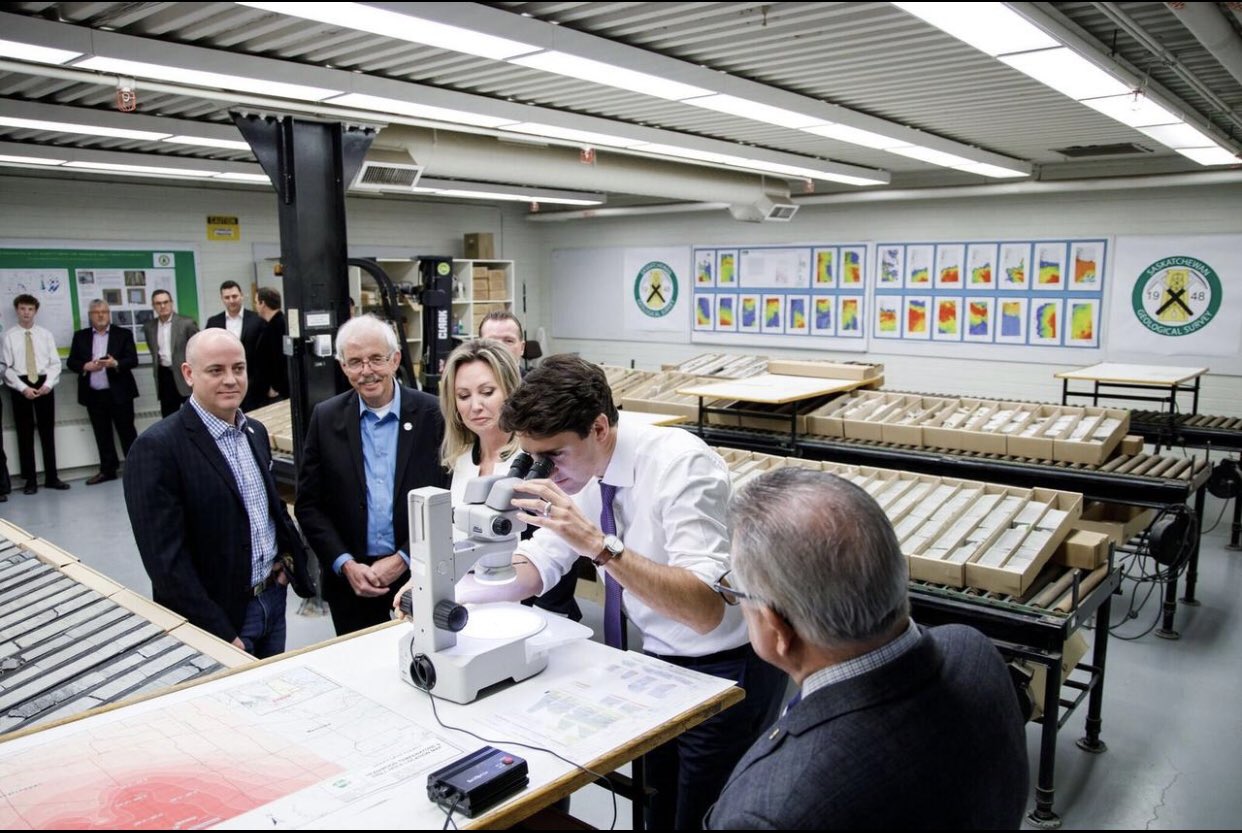
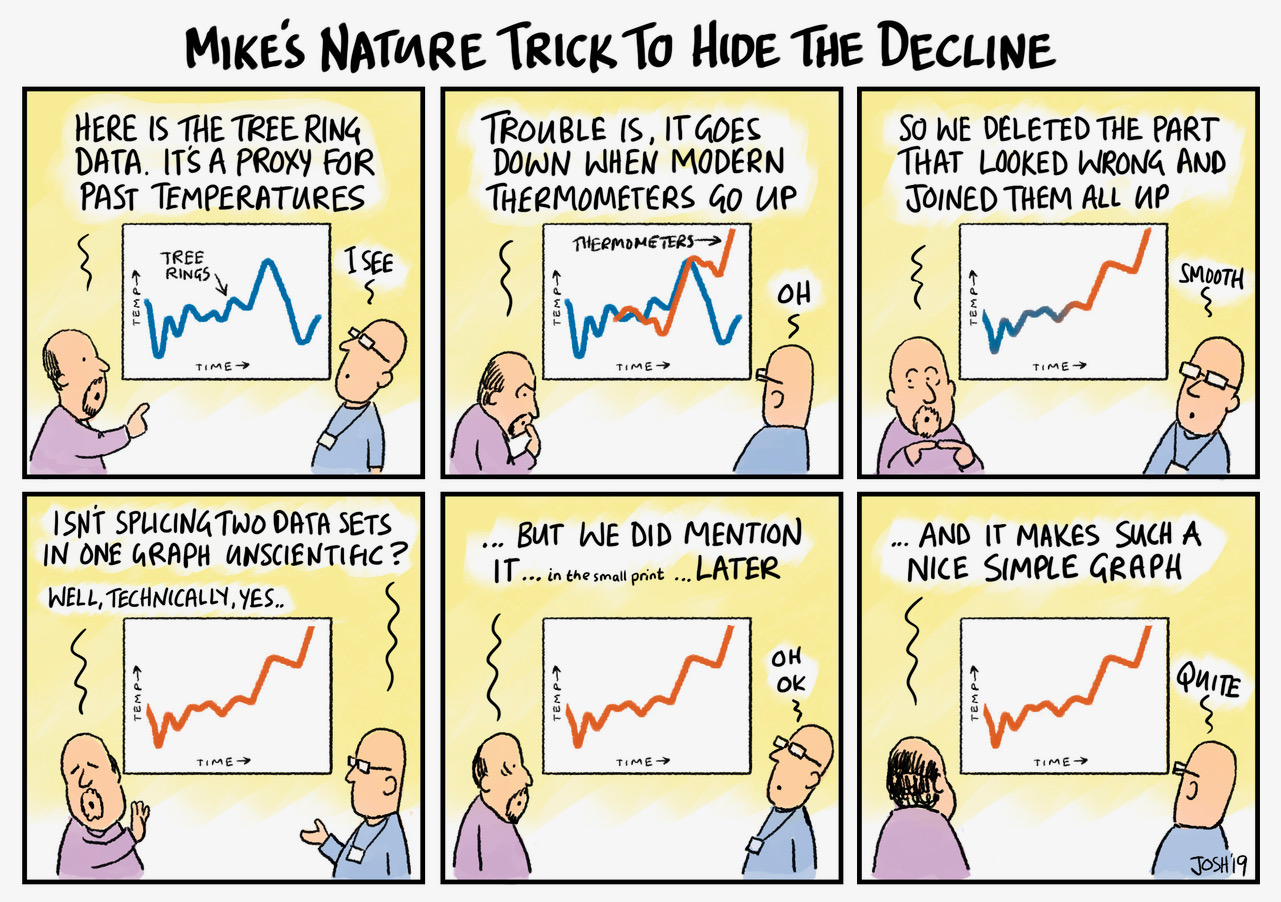


 colinwrightsblog